
Compression Socks vs Calf Sleeves: Coverage, Fit and Uses

Compression socks cover the foot and lower leg; calf sleeves leave the foot uncovered. That difference affects sizing, footwear and where the fabric applies pressure. A footless sleeve may suit someone who wants calf coverage with their own socks, but it should not replace prescribed graduated stockings without professional advice.
For this comparison, “socks” means a knee-high style. Short ankle socks and open-toe knee-high stockings are different designs, so look at the whole garment rather than the label alone.
The main differences at a glance
| Feature | Knee-high compression socks | Calf sleeves |
|---|---|---|
| Foot coverage | Includes the foot; toes may be covered or open | Leaves the foot uncovered |
| Size checks | Ankle, calf, length and any requested foot size | Calf and length, plus other points in the model’s chart |
| Ordinary socks | Usually already provides the sock layer | Lets you choose a separate foot sock |
| Lower edge | Continues into the foot section | Finishes above the foot; position varies by model |
| Medical prescription | Must match the prescribed pressure and style | Not an automatic substitute for a stocking prescription |
When foot coverage changes the decision
Someone choosing a garment for running may mainly be comparing feel and shoe space. Someone with swelling involving the ankle or foot has a different question. A calf-only sleeve does not provide the same coverage as a stocking that continues over the foot.
MedlinePlus describes compression stockings as garments used to support blood flow in the leg veins and explains that they come in different pressures and lengths. That medical role should not be assigned to every sports sleeve simply because the fabric feels tight.
If you have a treatment plan, ask whether the foot needs to be covered and which pressure is intended. New, unexplained or one-sided swelling needs assessment, not a trial of whichever garment is easiest to put on.

Why some people prefer calf sleeves
A sleeve lets you keep the ordinary socks that already work well in your shoes. It can also be convenient when you prefer an uncovered foot while changing footwear. The tradeoff is another garment edge and another item to fit correctly.
The Plain Black Calf Support Sleeves have a footless, pull-on construction. The product details do not state a measured medical pressure rating for this model, so do not treat it as equivalent to a prescribed mmHg stocking.

Check the complete setup
Try the garment with the shoes and socks you plan to wear. For a knee-high sock, check heel placement, toe room and fabric behind the knee. For a sleeve, check that the lower edge does not roll or dig in and that the upper edge finishes below the knee as intended.
Do not deliberately overlap a tight sock cuff, sleeve edge and ankle brace to create more compression. Layering changes the fit and does not produce a reliably calculated pressure. If you need multiple supports for a medical reason, have the combination checked.
For garment shape alternatives, our existing open-toe vs closed-toe stocking guide explains a separate choice. An open-toe stocking still covers much of the foot; it is not the same as a calf sleeve.
If you choose the knee-high sock shown above, use the compression sock measuring guide to record ankle, calf and length. For the footless sleeve, follow its own chart rather than carrying over the sock size.
A practical way to choose
- Identify the purpose. Is this a preference for activity clothing, or part of treatment for a diagnosed condition?
- Choose the coverage. Decide whether the foot, ankle and calf all need to be included.
- Verify the specification. Look for a stated pressure when that matters. Avoid interpreting “firm” or “support” as a measured rating.
- Match the chart. Do not transfer a size from socks to sleeves or from one model to another.
You can compare knee-high compression sock options with the calf sleeve collection once you know the coverage you need.
Questions people ask
Are calf sleeves easier to put on?
They remove the need to position a built-in foot section, but ease depends on fabric, size and hand strength. A very tight sleeve can still be difficult to apply.
Can I sleep in either one?
Do not infer overnight suitability from the style. Follow the garment instructions and any clinical wearing schedule.
Which one improves athletic performance more?
This structure comparison does not establish a performance advantage. Choose fit and coverage without assuming either garment will make you faster or prevent injury.
Sources
This guide provides general product and health information. It does not replace an individual assessment or the instructions supplied with a prescribed support.
Products mentioned in this guide
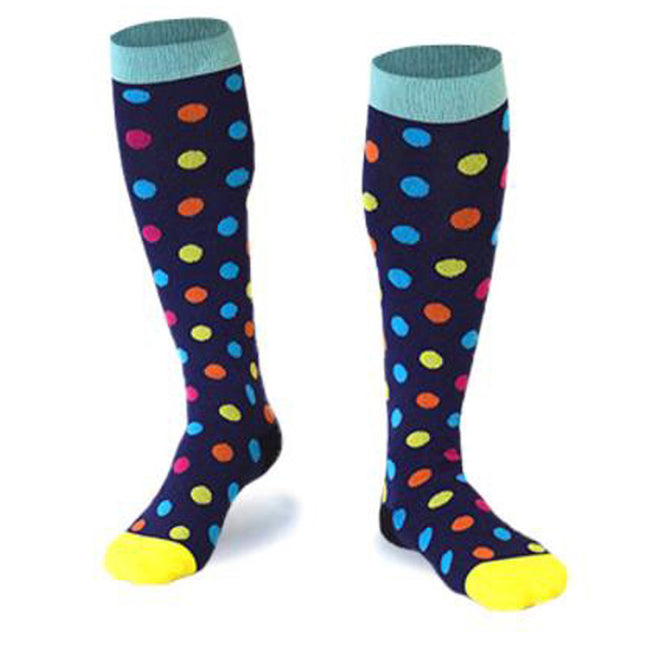
Product details
15–20 mmHg Compression Socks for Tired Legs, Work & Travel
15–20 mmHg support for tired legs
$18.99 USD
View sizes & details
Product details
Calf Support Sleeves for Activity & Daily Comfort – Plain Black Calf
Keep your own sock choice
From $12.21 USD
View sizes & details