
Forward Head Posture and Text Neck: Symptoms and Support

Forward head posture describes the head sitting farther forward relative to the shoulders. “Text neck” is a common label for neck discomfort associated with device use, rather than one specific diagnosis. You can have a forward-head position without pain, and neck pain can occur even when your posture looks upright.
The useful questions are what symptoms you have, how long you stay in a position and whether the screen setup or activity can be made more comfortable. A photograph of your neck does not answer all three.

What forward head posture means
Looking down and reaching the head forward are normal parts of everyday movement. Reading, cooking and working with tools all involve them. The term forward head posture usually refers to a habitual resting or working position, not every moment when you bend your neck.
The label becomes less useful when it is treated as proof of damage. A systematic review of 15 cross-sectional studies found an association between forward-head posture and neck pain in adults, but not most neck-pain measures in adolescents. These studies show relationships at a point in time; they cannot prove that head position caused a person's pain.
Symptoms people may describe as text neck
- An ache or tired feeling around the neck and top of the shoulders.
- Stiffness after prolonged screen use or another unchanging task.
- Discomfort when turning the head after sitting for a while.
- Symptoms that vary with workload, breaks or a change in position.
These symptoms are not unique to device use. Sleep position, muscle strain, an injury and nerve irritation are other possible contributors. Headache can accompany neck discomfort, but a new or unusual headache should not automatically be called text neck or blamed on your phone.
Pain travelling into an arm, persistent pins and needles, weakness or an unusually cold arm deserves assessment. A posture label should not obscure a different problem.
Why the whole setup matters
A small screen can lead you to lean closer, especially when text is difficult to read. Holding a device without arm support may also become tiring. At a laptop, the keyboard and screen are attached, so raising the screen can leave the keyboard too high unless you separate the controls.
There is no need to keep your phone at eye level with your arms suspended all evening. A stand, supported forearms, larger text or switching a long task to another device may be more practical. The aim is less unnecessary effort and more opportunities to move.
Consider the rest of the day as well. A demanding shift, poor sleep or stress can make a familiar task feel harder. Morecambe Bay NHS guidance includes these factors in neck-pain management alongside movement and relaxed, varied positions.
How neck symptoms are evaluated
A clinician will usually begin with the history and a physical examination: when symptoms started, what aggravates them, neck movement and any arm symptoms. If needed, they may assess strength, sensation, reflexes or coordination.
Imaging is not automatically required for uncomplicated neck pain. Hull NHS guidance notes that scans can show common age-related changes that do not explain the symptoms. Testing is chosen according to the clinical findings, rather than the degree of forward tilt in a selfie.
Arrange an assessment if symptoms persist for several weeks, keep returning or interfere with ordinary activities. New or progressive weakness, clumsy hands or difficulty walking needs urgent assessment, especially if more than one area is affected.
Practical changes for phone and computer use
| Situation | Change to try | What to observe |
|---|---|---|
| Reading small text | Increase text size or use a larger display | Whether you stop leaning closer to see |
| Long phone sessions | Support the forearms or use a device stand | Whether the shoulders can relax |
| Prolonged laptop work | Raise the screen and use a separate keyboard and mouse | Whether both viewing and typing feel comfortable |
| Repeatedly turning toward a screen | Place the main task more directly in front | Whether less sustained rotation is needed |
HSE's workstation guidance offers a useful starting layout, including a screen near eye level and separate controls for prolonged laptop use. Adapt the arrangement to your vision, task and comfort. Recheck it after moving between home, office and shared desks.
Movement and the role of support
Keep comfortable neck movement in your day rather than holding the head in a fixed “corrected” position. An easy walk, a change of task or gentle movement within your comfortable range can interrupt a long screen session. If exercises have been prescribed, progress them as advised instead of adding forceful stretches.
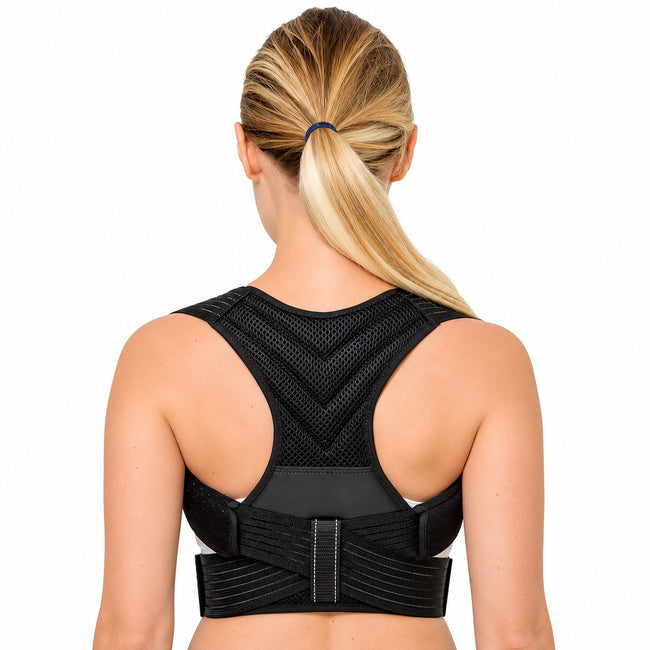
A shoulder or upper-back posture support may provide a position reminder, but it does not immobilize the neck or establish the cause of symptoms. If you are comparing posture corrector braces, check that the straps do not pull toward the neck or interfere with arm movement. NHS advice discourages neck collars for ordinary neck pain unless a clinician has directed their use.
Frequently asked questions
Does looking down at a phone damage the neck?
Looking down is a normal movement. Long, uncomfortable sessions may aggravate symptoms, but that does not mean every period of phone use causes structural damage.
Does the head become heavier when it tilts?
Its actual weight does not change. Position changes the mechanical demands on the neck, but popular “pounds of pressure” graphics cannot diagnose injury or predict an individual's pain.
Should I do chin tucks all day?
No. A chin-tuck movement may be included in an individualized exercise program, but constantly forcing the head backward is not the goal. Exercise should suit your symptoms and remain tolerable.
Can a posture brace fix text neck permanently?
It cannot promise a permanent correction. Any useful role is as part of a plan that addresses the task, comfortable movement and the actual reason for symptoms.
How do I know whether the changes are helping?
Compare the same everyday task: can you read, work or turn your head more comfortably? Track that response rather than trying to achieve a particular angle in every photograph.
Sources and further reading
Products mentioned in this guide
Product details
Adjustable Posture Corrector for Desk Work | Mesh Upper Back Brace
Breathable mesh comfort
$49.99 USD
View sizes & details