
How to Put On a Shoulder Brace: Chest and Upper-Arm Straps

For a wrap-style shoulder brace, position the shoulder panel first, then adjust the upper-arm section and chest strap in the order supplied with the product. Keep each part flat and make small adjustments. A tight chest strap should never be used to force a poorly positioned shoulder panel into place.
This guide covers an ordinary single-shoulder wrap with a chest anchor. It does not explain how to fit a post-surgery sling, abduction cushion or fracture brace. Those need the fitting instructions from your care team.
Check the side and measurements first
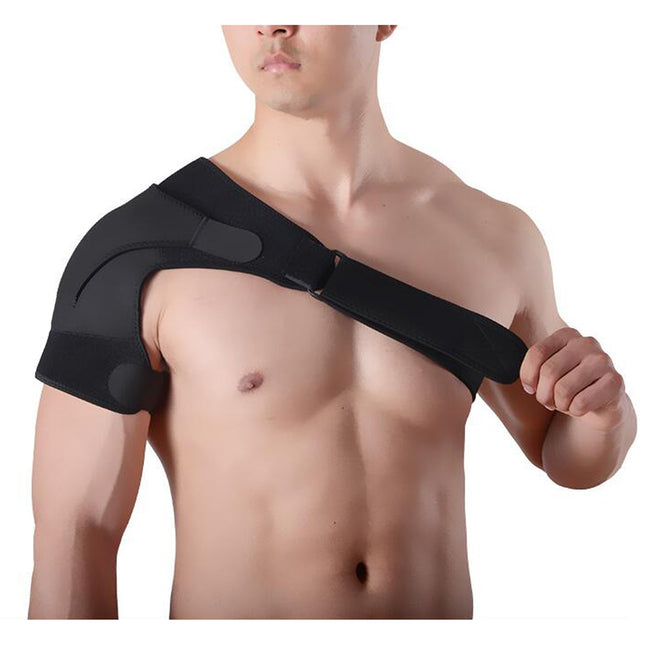
Confirm whether the brace is for the left shoulder, right shoulder or both. The Black Single-Shoulder Support Brace has separate Left and Right options. Those labels identify the side; they are not a substitute for chest and upper-arm fit information.
Before ordering, compare the measurements requested by the model. If the current page does not state a needed range, ask for clarification rather than assuming a “one size” shape will fit you.

Still deciding whether you need a wrap or a forearm-supporting device? Compare the structures in shoulder brace versus sling before following these wrap-fitting steps.
Put the wrap on without forcing the shoulder
- Open the closures. Loosen enough fabric to position the brace without pulling the arm through a tight opening.
- Let the shoulder rest comfortably. Do not shrug upward or twist your torso to make the brace seem easier to fasten.
- Position the main panel. Place it over the intended shoulder with the seams and edges lying flat. Follow the instructions about whether clothing belongs underneath.
- Fit the upper-arm section. On the pictured model, this is adjusted separately. Smooth any folds before fastening it.
- Bring the chest strap around as shown. Keep it untwisted and away from a position that digs into the neck or opposite armpit.
- Adjust gradually. Use small changes to balance the two fastenings. Stop if you need excessive force to close them.
- Check comfort within your allowed movement. Breathe normally and make only movements that are comfortable and permitted. Do not test the support with an overhead lift or heavy weight.
If reaching the strap is painful, ask someone to help. Needing assistance does not mean the brace should be tightened with your arm in an awkward position.
Check both straps, not just the shoulder panel
| What you notice | What to check |
|---|---|
| The panel shifts toward the neck | Side selection, panel position, strap route and whether the size matches |
| The upper-arm edge pinches | Wrinkles, excessive fastening tension or an unsuitable arm opening |
| The chest strap feels restrictive | Loosen and reposition it; do not accept restricted breathing as normal support |
| You need to keep shrugging | The position or design may not suit your shoulder and torso |
| The closures barely overlap | Check the stated range before attempting more tension |
There is no universal “two fingers” test that validates every shoulder support. Use the manufacturer’s fit checks and your symptoms. New tingling, numbness, swelling or skin color change means the setup needs attention, not more tightening.
Plan the first use around an easy task
Once correctly fitted, try the wrap during a low-demand activity that has been cleared for you. Check whether the edges stay flat and whether discomfort changes. Do not use reduced pain as permission to resume heavy lifting or sport.
NHS shoulder pain guidance advises staying gently active while avoiding activities that make symptoms worse. That general advice does not override restrictions after an operation, dislocation or other diagnosed injury.
Wear time is a separate issue from fitting. Use our shoulder brace wear-time guide to prepare questions about activity, rest and overnight use.
Questions people ask
Can I wear a shoulder brace over a shirt?
Check the model instructions. If a layer is permitted, choose smooth fabric and avoid thick seams under the straps. Fit it over the actual layer you plan to wear.
Can I reverse a right-side brace for my left shoulder?
Only if the manufacturer states that it is reversible. Do not infer reversibility from stretchy material.
What if pain makes it difficult to put on?
Stop forcing the arm. Ask for fitting help and clinical advice about the pain. Sudden severe pain or inability to move the arm needs prompt assessment.
To compare chest anchors, panel shapes and side options, browse shoulder support braces after confirming which support type is appropriate.
Sources
This guide provides general product and health information. It does not replace an individual assessment or the instructions supplied with a prescribed support.
Products mentioned in this guide
Product details
Adjustable Shoulder Support Brace for Strain & Everyday Comfort
A shoulder panel gives focused coverage over one shoulder and upper arm.
$16.99 USD
View sizes & details