
Varicose Veins and Leg Swelling: Choosing Compression Socks

Heavy legs after a long shift, swollen ankles by evening and raised veins can be signs of a vein problem. Compression socks may help selected symptoms, but they work best when the cause of swelling is understood and the garment is properly chosen. Sudden swelling in one leg is a different situation and needs medical assessment.
Why varicose veins develop
Leg veins move blood back toward the heart. Their valves help keep it travelling in the right direction. When vein walls or valves weaken, blood can pool or flow backward, increasing pressure and making superficial veins enlarge and twist. Age, pregnancy, family history and prolonged sitting or standing can contribute, according to the National Heart, Lung, and Blood Institute.
Common symptoms include aching, heaviness, itching and ankle swelling. They may become more noticeable after standing and ease when the legs are raised. Skin discoloration or a slow-healing sore also deserves attention. However, not every swollen leg is caused by varicose veins; the visible appearance alone cannot establish the diagnosis.
How vein symptoms are assessed
A clinician asks about the pattern of swelling, discomfort, previous clots and medical history, and examines the legs. A duplex ultrasound can check blood flow and identify reflux when treatment is being considered. This helps distinguish a vein problem from other explanations and guides treatment selection.
The NHS overview of varicose veins describes treatment options including endothermal ablation, foam sclerotherapy and surgery. Compression may be offered when procedures are unsuitable or unnecessary, or after treatment. Stockings can relieve symptoms; they do not eliminate the underlying reflux in the way a vein procedure aims to address it.
What compression socks can help with
Appropriate compression applies pressure around the leg to support venous blood return and can reduce swelling or aching for some people. Graduated compression is designed to provide greater pressure lower down the leg. A clinician may recommend it during long periods upright, for established venous symptoms or as part of care after a procedure. The reason for wearing it determines the appropriate garment and schedule.
Compression is not automatically suitable for everyone. Poor arterial circulation needs particular assessment. If you have unexplained swelling, wounds, reduced sensation or an existing circulation diagnosis, ask a clinician before selecting a stronger stocking. A product described as “supportive” does not establish a medically appropriate pressure.
Choose pressure, length and size separately
Pressure ratings in mmHg and compression-class labels are not the same as clothing sizes. Different products and standards use different class systems. Use the actual stated pressure range where available and follow the recommendation you were given, rather than assuming that “firm” or a higher number is better.
The Kingston and Richmond NHS compression guide explains that selection depends on circulation assessment, history, current condition and comfort. Ankle, calf and relevant length measurements matter. Above-knee styles require additional measurements; an extended garment is not automatically a better choice.
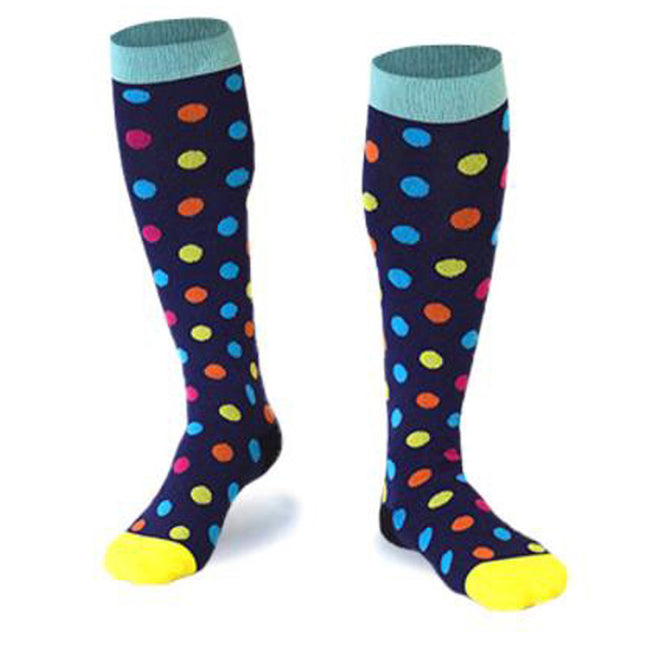
Use the compression socks collection to compare coverage, opening style and available sizing. Before choosing a compression sock style, confirm its pressure information and measurement chart. Do not infer medical compression from copper-colored yarn, fabric thickness or the product photograph.
Making daily wear practical
Measure where the selected product's chart specifies, without pulling the tape tight. Below-knee hosiery commonly needs both ankle and calf circumferences; shoe size alone is insufficient. The Cheshire and Wirral NHS hosiery leaflet also explains that non-standard leg measurements may require made-to-measure hosiery.
- Check that the heel sits in its intended position and the fabric lies smoothly.
- Avoid folds or a rolled top that creates a tight band.
- Ask about a donning aid or an alternative design if putting stockings on is difficult.
- Follow your prescribed schedule. Routine daytime hosiery is generally removed at bedtime unless your care team says otherwise.
Break up long periods of sitting or standing, keep walking as your condition allows, and raise your legs when resting. Compression complements these habits; it does not make prolonged immobility harmless.
When swelling needs urgent assessment
New one-sided swelling with calf or thigh pain, warmth or skin-color change may indicate a blood clot. Seek urgent medical assessment and do not try to treat it by purchasing compression socks. If this occurs with chest pain or breathlessness, seek emergency help. The NHS DVT guidance describes these symptoms and the need for prompt diagnosis.
Sources and further reading
Written by the ZSZBACE editorial team. Sources checked November 2026.
Products mentioned in this guide
Product details
15–20 mmHg Compression Socks for Tired Legs, Work & Travel
15–20 mmHg support for tired legs
$18.99 USD
View sizes & details