
Sacroiliac Joint Pain: Symptoms, Treatment and SI Belt Fit

Pain near the back of the pelvis can make standing, climbing stairs or getting out of a chair uncomfortable. The sacroiliac joints are one possible source, but pain in this area can also come from the lumbar spine, hips or other tissues. An SI belt is a targeted pelvic support, so it is worth establishing the likely cause before choosing one.
Where are the sacroiliac joints?
The two sacroiliac, or SI, joints connect the sacrum at the base of the spine to the pelvic bones. They transfer load between the trunk and legs and normally allow only limited movement. Their job is different from that of the more mobile lumbar spine.
Tyneside Integrated Musculoskeletal Service explains that pregnancy-related changes, an injury such as a fall, osteoarthritis or an inflammatory condition can contribute to SI-region pain. Pain does not prove that a joint has “slipped out,” and the same symptom location can have several causes.
Symptoms and diagnosis
Discomfort may be felt around one or both buttocks, beside the lower spine, or toward the hip or groin. It can be affected by loading one leg or changing position. Tell your clinician about the exact location, any injury, pregnancy or recent birth, and whether symptoms improve with rest or movement.
A clinician examines the spine, hips and pelvis and may use several pain-provocation tests. The American Academy of Family Physicians review describes using a combination of findings rather than one isolated test. In selected cases, an image-guided local-anesthetic injection helps investigate whether the joint is the pain source. Trying a belt is not a diagnostic test.
Persistent morning stiffness, pain that improves with movement rather than rest, night waking or a history of psoriasis, inflammatory bowel disease or eye inflammation are useful details to raise during an assessment. They may prompt consideration of inflammatory back disease rather than treating every episode as a simple mechanical strain.
What treatment usually involves
Initial care often combines education, appropriately paced activity and physiotherapy. Rehabilitation can address pelvic and hip strength, flexibility and the movements that aggravate symptoms. Manual therapy may be included. Pain medication is considered according to your health history; ask about suitability, especially during pregnancy or after birth.
Remaining gently active is generally preferable to extended bed rest. The National Institute of Arthritis and Musculoskeletal and Skin Diseases recommends adjusting activities that increase pain and building activity gradually. A useful plan relates exercises to your daily needs rather than only to an image or a pain label.
If simpler treatment is insufficient, a specialist may discuss injections or other procedures. Guy's and St Thomas' NHS guidance explains that SI injections can reduce pain for a period and are commonly combined with physiotherapy. They are not a guaranteed permanent cure; the expected benefit and risks should guide the decision.
SI belt versus lumbar back brace
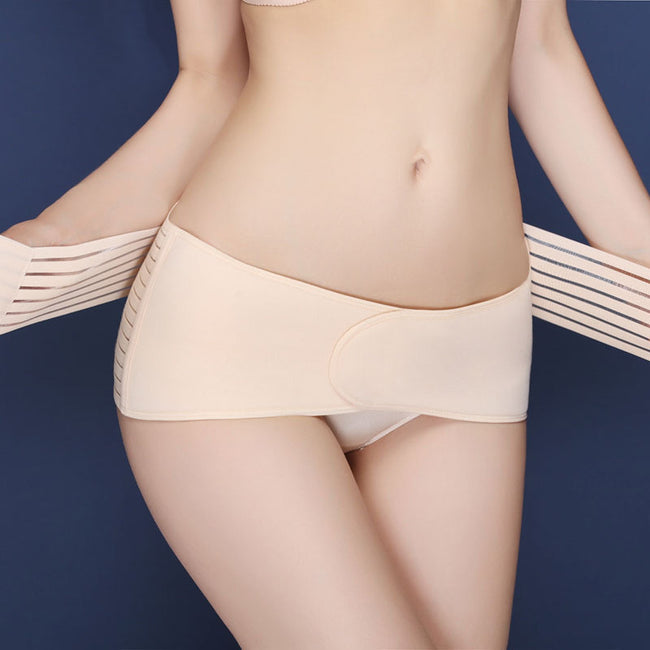
An SI belt is designed to sit low around the pelvis, applying support across the pelvic ring. A lumbar brace generally wraps higher around the waist and lower back, often with a broader rear panel. A full-back posture brace adds shoulder or upper-back coverage. More coverage does not make a product a more targeted SI support.
Pelvic belts may help selected people, with clinical guidance particularly noting their possible usefulness after pregnancy. Their role is an adjunct to a rehabilitation plan, not proof that the pelvis is unstable and not a way to permanently realign the joints.
Compare sacroiliac and pelvic support belts with lumbar support belts by wearing position and construction. A pelvic support belt should have a chart that matches the circumference at its intended low position. Measuring the narrowest part of your waist may give the wrong size.
For a more detailed buying comparison, read SI joint belt versus lumbar support belt.
How to judge a belt trial
- Ask your physiotherapist to confirm the intended position and tension.
- Compare one familiar task, such as a short walk or standing at the counter, with and without support.
- Check seated comfort and whether the belt stays in place without digging into the hips.
- Use it for an agreed purpose and review whether it makes activity easier; do not keep tightening it to chase pain relief.
When to seek medical help
Arrange assessment for persistent or worsening pain, especially after injury or with fever or unexplained weight loss. New bladder or bowel changes, numbness around the genitals or anus, or weakness or numbness in both legs requires emergency assessment. These are warning signs described in the NHS back-pain guidance, not symptoms to manage with a support belt.
Sources and further reading
Written by the ZSZBACE editorial team. Sources checked November 2026.
Products mentioned in this guide
Product details
Pelvic Support Belt for Pregnancy & Postpartum Hip Discomfort
Focused support around the pelvis and hips
$22.00 USD
View sizes & details