
15–20 vs 20–30 mmHg Compression Socks: What Changes?

20–30 mmHg is a higher labeled compression range than 15–20 mmHg. It is not simply a better version of the same sock. Pressure, garment size, leg shape and the reason for wearing compression all matter. If compression has been prescribed, use the range and garment type your clinician recommended.
For someone comparing everyday products, the useful question is not “How much pressure can I tolerate?” It is “What level is appropriate, and can I fit and wear the garment correctly?”
What mmHg tells you
mmHg means millimeters of mercury, a unit of pressure. On graduated compression hosiery, the stated range generally refers to compression at the ankle under the relevant testing conditions. It does not mean that every part of the sock applies the same pressure or that the exact pressure on every wearer is identical.
Fit influences how a garment behaves. Buying a size too small is not a reliable way to turn a 15–20 mmHg sock into a 20–30 mmHg sock. Buying one too large is not a controlled way to lower the pressure.
| Comparison | 15–20 mmHg | 20–30 mmHg |
|---|---|---|
| Label meaning | The lower of these two pressure ranges | The higher of these two pressure ranges |
| Typical fitting concern | Still needs the correct ankle, calf and length measurements | Also needs correct measurements; firmer pressure can make application more demanding |
| How to choose | Match the purpose and any clinical advice | Do not step up just because symptoms persist in a lighter pair |
| What it does not prove | That it is appropriate for every person with tired legs | That it will treat the cause of swelling, pain or numbness |
Why “Class 1” and “Class 2” can be confusing
Compression classes vary between standards. A class name used in one country or product system does not always correspond to the same pressure range in another. The NHS North West compression formulary compares British and RAL pressure classes, illustrating why the actual mmHg range and standard matter.
When replacing a prescribed garment, keep the packaging or prescription details. Compare the stated range, length and standard rather than assuming two products marked “Class 2” are identical.
Before moving to a higher pressure
If a pair slides down, rolls at the top or feels ineffective, check the fit first. Extra length can bunch behind the knee; a cuff can roll because the shape does not suit your calf. Neither problem is necessarily solved by stronger compression.
If swelling or pain is continuing, ask about the cause. MedlinePlus advises discussing the right stocking type and pressure with a healthcare provider. Persistent symptoms should not turn into a cycle of buying progressively tighter socks.
- Check all measurements against the exact chart.
- Check whether the sock is worn out or being applied with wrinkles.
- Check the prescribed or suggested wearing routine.
- Ask for advice before changing pressure for a diagnosed condition.
Read the product specification carefully
The pictured zszbace sock is listed as 15–20 mmHg. Compare that specification with any clinical recommendation, then confirm both the pressure range and size on the label supplied with the socks.

In the 15–20 mmHg compression socks collection, read the individual product details. A category name alone should not replace the label supplied with the garment.
When to ask before using either range
Get individual advice if you have known arterial circulation problems, reduced sensation, significant skin damage, unexplained swelling or a condition for which compression has already been prescribed. Do not use a product comparison to decide whether compression is safe for a new symptom.
If you develop new numbness, pain, coldness or a color change while wearing a pair, remove it and seek appropriate medical advice. A sudden painful or markedly swollen leg needs prompt assessment.
Questions people ask
Can two lighter pairs replace one stronger pair?
Do not try to calculate pressure by adding labels. Layered compression is a separate fitting decision and should follow a professional plan.
Does “medical grade” tell me the exact pressure?
No. Look for the pressure range, intended use and clear manufacturer information. A marketing phrase alone is not a complete specification.
Does stronger compression mean a longer wearing time?
No. Pressure and wear time are separate decisions. For general scheduling questions, see how long to wear compression socks, and follow your own care plan where one applies.
Sources
This guide provides general product and health information. It does not replace an individual assessment or the instructions supplied with a prescribed support.
Products mentioned in this guide
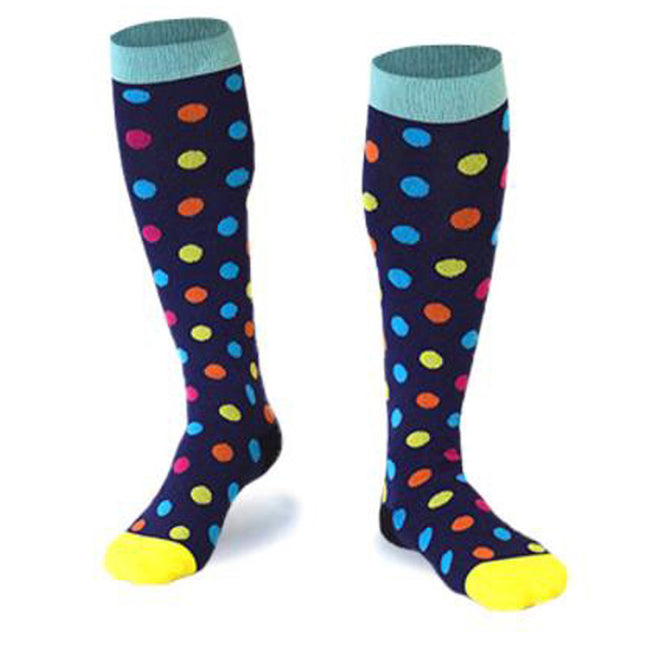
Product details
Patterned Compression Socks
15–20 mmHg knee-high compression socks for women and men, designed for circulation support and everyday comfort.
$18.99 USD
View sizes & details