
Flexible Back Braces vs Rigid Braces: Corsets, Stays and Movement

A flexible back brace wraps around the body and allows more movement; a rigid brace uses a firmer shell or frame to restrict particular movements. Between those ends are fabric supports with stays, reinforced panels or adjustable cords. The most useful choice is the structure that matches your purpose, not whichever product looks strongest.
“Flexible corset,” “lumbar belt” and “active brace” can describe overlapping designs. They are not interchangeable medical specifications. If you want everyday waist support, compare the belt's coverage and fastening. If your care team prescribed movement restriction after an injury or operation, the exact brace and fitting instructions take priority.
What changes between flexible, reinforced and rigid designs?
| Design | What to look for | What the label does not establish |
|---|---|---|
| Flexible lumbar belt or corset-style support | A wraparound fabric body, overlapping front closure and adjustable tension | A proven treatment for a particular spinal condition |
| Fabric brace with stays or panels | Reinforcement within a fabric body; check whether parts are removable | The same restriction as a rigid spinal orthosis |
| Full-back posture brace | Shoulder straps connected to an upper-back panel and sometimes a waist anchor | Automatic classification as a medical TLSO |
| Rigid spinal orthosis | A defined shell or frame with prescribed fitting and positioning | Suitability for every back-pain problem |
Stays are reinforcing strips. Their material, length, shape and placement all matter. Two supports can contain metal strips yet feel quite different because the surrounding fabric and strap arrangement differ. A cord adjustment tells you how tension is applied; it does not, by itself, tell you how rigid the whole brace is.
What is a flexible back corset?
A support corset generally wraps around the lumbar region and abdomen. It can provide a close, adjustable fit without the enclosing shell of a rigid brace. For shopping purposes, “flexible lumbar support” is often the clearer description: inspect the actual belt instead of assuming that “corset” means fashion shapewear, a waist trainer or a prescribed orthopedic device.
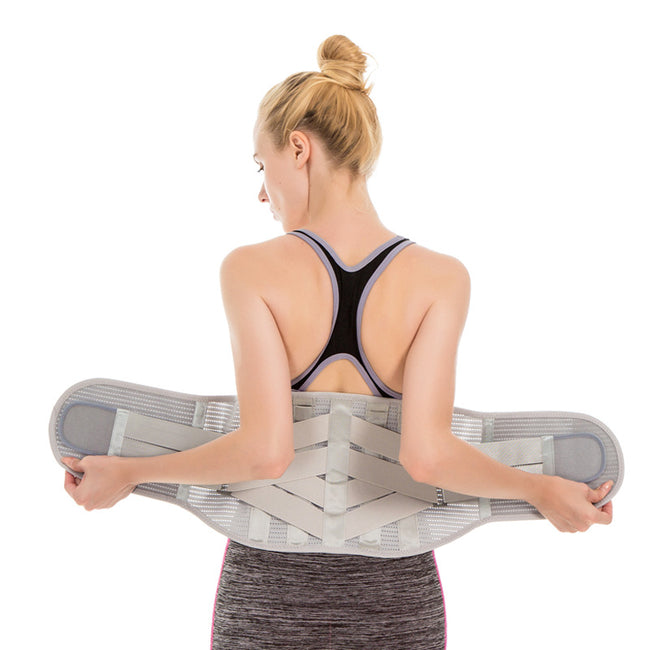
Consider a waist-only style when the coverage you want is around your lower back. Shoulder loops add a different contact area and fitting requirement. They are useful to compare when your goal also includes an upper-back posture reminder, but they do not automatically make a lumbar belt better.
Fabric does not mean nonmedical. Guy’s and St Thomas’ NHS describes a clinically fitted lumbar sacral corset made from canvas, sometimes with metal rods. North Tees and Hartlepool NHS explains that prescribed spinal supports may be fabric or rigid, depending on clinical needs. A retail product’s construction and a clinician’s indication are separate questions.
What does “active brace” mean?
On a retail page, “active” may simply describe a support intended to be worn while moving. In clinical settings, the term can refer to particular orthoses with a specific design and treatment purpose. Read the full description before transferring those expectations to a general support belt.
For everyday movement, ask concrete questions: Can I sit without the edge pressing into my ribs? Can I walk with a normal stride? Does the closure stay flat when I stand up? Does the brace allow the movements intended for my activity? Those checks are more informative than an “active” badge.
Three ZSZBACE structures worth comparing

- Cross-Panel Lumbar Support Belt: a waist-level support with crossing straps, a defined rear panel and hook-and-loop adjustment. Compare it when you want wraparound lower-back coverage without shoulder loops.
- Striped Dual-Pull Lumbar Belt: has a main closure followed by two outer pulls. That separate adjustment stage lets you refine the fit after positioning the belt.
- BraceTop Back Brace Posture Corrector: combines shoulder straps, a wide elastic waist belt and removable support strips. It illustrates how a fabric support can include reinforcement without becoming a rigid shell brace.
These examples are for comparing documented construction. The listings do not establish that they supply the same movement control as a prescribed TLSO or LSO. Likewise, a soft belt with a tall rear panel should not be selected for a spinal fracture merely because it covers the painful area.
When pain is part of the decision
Some shoppers value a close, supportive feeling during a particular task. That personal comfort question is different from whether a brace treats the cause of ongoing pain. NICE does not recommend belts or corsets for managing low back pain, with or without sciatica. WHO also advises against routine lumbar supports for chronic primary low back pain. These recommendations do not replace instructions for a specifically prescribed brace after an injury or procedure.
If you are shopping because pain keeps returning, clarify the problem rather than repeatedly increasing stiffness. Continuing appropriate activity, building capacity and addressing the provoking task remain relevant. A brace cannot tell you whether pain is coming from muscles, a joint or nerve irritation.
A practical fitting sequence
- Measure at the position requested by the individual product chart. Waistband size alone is unreliable.
- Place the rear section centrally and fasten the main closure with comfortable overlap.
- Adjust secondary straps gradually. Keep normal breathing and avoid using extra tension to compensate for the wrong size.
- Try sitting, standing and a short walk. Look for edge pressure, slipping, rolled fabric and shoulder rubbing.
- Recheck after changing clothes or activity. A fit that works standing still may need adjustment when seated.
For differences in torso height and overlap, read our plus-size back brace fitting guide. You can also compare structures across back braces for men and back braces for women; the individual measurement chart matters more than the collection label.
To compare the adjustment controls on the waist-level examples, read dual-pull versus cord-adjustment lumbar braces. For the difference made by adding shoulder straps, see lumbar belts versus full-back posture braces.
Frequently asked questions
Is a flexible brace weaker than a rigid brace?
It usually allows more movement, but “weaker” is not a useful buying rule. Different designs serve different purposes. More restriction can be inconvenient when you only need adjustable everyday support, while insufficient restriction is unsuitable when a specific orthosis has been prescribed.
Does a brace with steel stays count as a rigid brace?
Not automatically. Stays can reinforce a fabric belt, but the full structure determines how it behaves. Check the panel, strap layout and stated use instead of classifying it by one material.
Can I remove the stays to make a brace more flexible?
Only when that model is designed for removal and its instructions allow it. The BraceTop listing describes removable strips; that feature should not be assumed for other products. Do not alter a prescribed orthosis without your care team.
Will a flexible corset permanently straighten my back?
An everyday support can provide a posture cue while worn. Permanent correction of a spinal curve is a different claim and is not established by a general-purpose corset or posture-belt listing.
Should I choose a larger size for easier movement?
Choose the specified measurement range first. Excess size can reduce useful closure overlap or let the belt shift. If your circumference fits but the panel digs into you when seated, compare a different height or shape rather than simply sizing up.
Sources and further reading
Products mentioned in this guide
Product details
Cross-Panel Lumbar Back Support Belt with Adjustable Straps for Lower Back Pain
Support around the waist
$69.00 USD
View sizes & details
Product details
Lower Back Brace for Pain Relief & Lumbar Support
Targeted support for a tired lower back
$24.99 USD
View sizes & details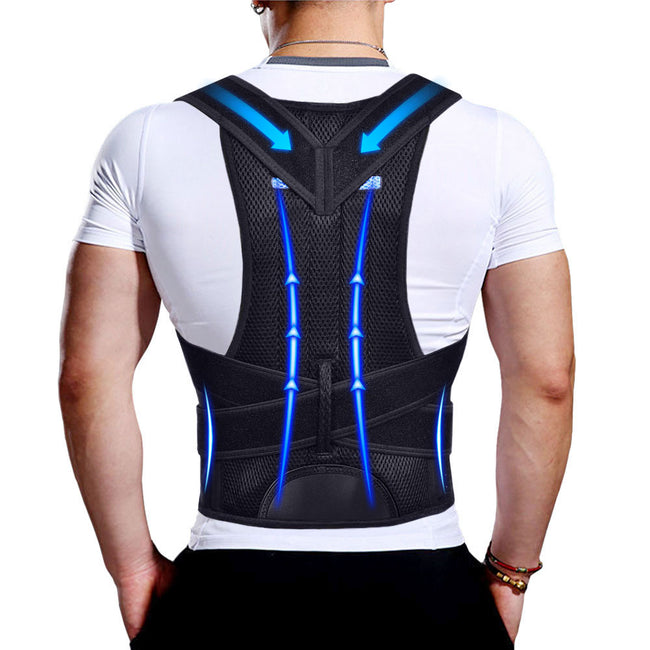
Product details
BraceTop Full Back Posture Corrector for Men & Women with Lumbar Waist Belt
Breathable mesh comfort
$38.00 USD
View sizes & details