
Plus-Size Back Brace Fit: Waist Coverage, Torso Height and Straps

A plus-size back brace needs enough closure overlap, suitable panel height and room to sit comfortably—not just a larger size label. Two people with the same waist circumference can need different belt shapes because their torso height and abdominal profile differ.
Use this guide to compare fit features on ordinary lumbar belts and posture supports. A prescribed spinal orthosis should be fitted and adjusted according to your clinical plan.
Check three dimensions of fit
| Fit factor | What to establish | Why it matters |
|---|---|---|
| Circumference | Measure at the body level shown in the product chart | Jeans size or the narrowest waist may not match the belt position |
| Panel height | Check the rear and front panel height | A wide panel can reach the ribs or thighs on a shorter torso |
| Closure and strap reach | Check secure overlap and the available adjustment range | Secondary pulls should not have to compensate for a main belt that barely closes |
For the measurement process itself, use the existing back brace measuring guide. This article focuses on what to do with those measurements when a larger waist or shorter torso makes fit less straightforward.
Do not use “XXL” as a universal measurement
A size label only has meaning within that product’s chart. The same label can describe a different circumference range on another belt. Check the exact option and ask for a range if it is missing.
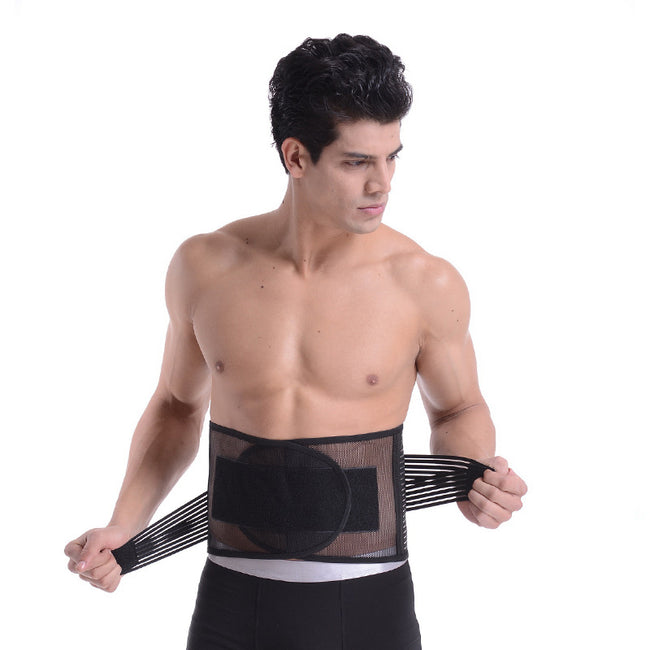
The Mesh Lumbar Belt with Side Pulls offers sizes from S through XXL. Confirm the circumference range for the exact option before ordering: an XXL label alone does not tell you whether the belt will close correctly around your body.

For two additional charts to compare, open the Striped Dual-Pull Lumbar Belt for waist-only coverage and the Cross-Wrap Full Back Posture Corrector with XS–5XL options for connected shoulder-and-waist coverage. The full-back chart also provides height and weight references; use each model’s own measurements rather than assuming that “5XL” and “XXL” describe the same fit.
Why a wider panel is not always more comfortable
A taller belt may give the coverage you prefer while standing, yet press into the lower ribs or upper thighs when you sit. This is particularly relevant if the space between your ribs and hips is short. Increasing the circumference size does not necessarily fix an excessive panel height.
A different design may distribute fabric differently around the front and sides. Compare those shapes before deciding that every belt in a given size will fit the same way.

Use a seated fitting check
- Fit the belt at the instructed level over the permitted clothing layer.
- Fasten the main closure securely without holding your breath or pulling in your stomach.
- Adjust any outer straps in the stated order.
- Sit in a normal chair and notice whether the front panel folds or the lower edge catches your thighs.
- Stand again and check whether the rear panel has shifted upward.
If the belt only fits while you stand rigidly, reassess the shape and size. Repeatedly pulling it down or tightening the upper edge is not a lasting solution.
Questions to ask before ordering
- Which body point should I measure around?
- What is the range for the exact size option?
- How tall are the front and back panels?
- How much closure overlap is required?
- Does the model use waist-only coverage or connected shoulder straps?
Send your measurements and the exact product link when asking for help. A photograph of a size chart can be useful, but do not rely on a chart from another model.
Browse the men’s back brace collection or women’s back brace collection as comparison starting points. Many designs are unisex; the model’s measurements and shape determine fit.
Questions people ask
Should I buy one size smaller for firmer support?
No. Select the stated measurement range. A too-small belt can create poor overlap and uncomfortable pressure without providing the intended fit.
Can I add an extender?
Only use an extender approved for that specific model. A generic extension can change the fastening geometry and does not correct an unsuitable panel height.
What if the brace leaves sore marks?
Check the fit and stop using it if it is causing persistent soreness. For prescribed supports, contact the orthotist. Rotherham NHS advises review when a spinal brace causes persistent marking or worsening symptoms.
If clothing is part of the problem, compare a smooth base layer and a looser outer garment before changing the belt size. Never cut a rigid panel to shorten the brace.
Sources
This guide provides general product and health information. It does not replace an individual assessment or the instructions supplied with a prescribed support.
Products mentioned in this guide
Product details
Mesh Lumbar Belt with Side Pulls for Lower Back Pain
Fine-tune your compression
$37.00 USD
View sizes & details
Product details
Lower Back Brace for Pain Relief & Lumbar Support
Targeted support for a tired lower back
$24.99 USD
View sizes & details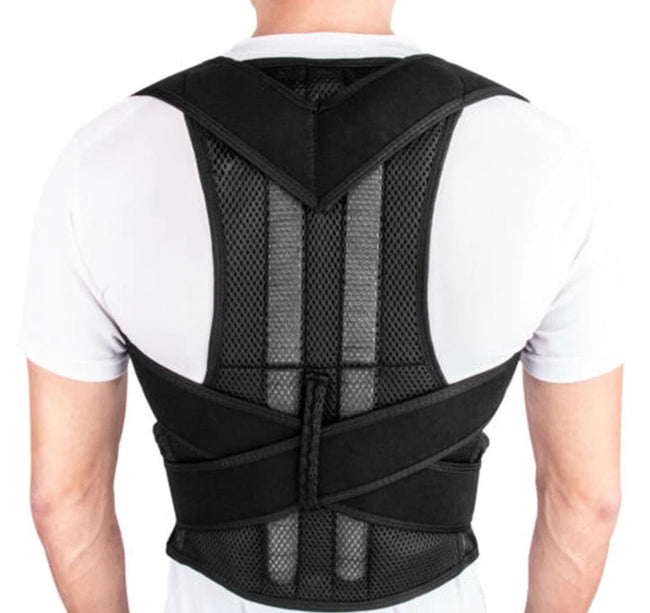
Product details
Cross-Wrap Full Back Posture Corrector & Waist Support, XS–5XL Options
Breathable mesh comfort
$36.00 USD
View sizes & details