
Hand Arthritis: Symptoms, Treatment and Supportive Gloves

Stiff fingers, aching knuckles and a weaker grip can turn ordinary jobs into a series of small difficulties. Hand arthritis has several causes, and the useful plan depends on which joints are involved and the type of arthritis. Treatment, practical changes and appropriately chosen supports can help you keep doing the tasks that matter.
What causes arthritis in the hands?
The hand contains many small joints. AAOS explains that osteoarthritis involves gradual changes to joint cartilage, while arthritis can also develop after a joint injury. Rheumatoid arthritis is an autoimmune condition involving the joint lining and often affects matching small joints on both sides of the body.
Finger joints, knuckles, the thumb base and the wrist do not all need the same support. If your pain is concentrated where the thumb meets the wrist, our thumb-base arthritis guide covers CMC-joint support specifically.
Which symptoms are worth noting?
Arthritis may cause joint pain, swelling, stiffness and difficulty moving the affected fingers. Some people notice aching after gripping or stiffness on waking; others find particular tasks increasingly difficult. The pattern can change during a flare. Note which joints hurt, when stiffness occurs and whether symptoms affect one or both hands.
A useful appointment note might read: “Both hands feel stiff in the morning, and fastening buttons is becoming harder.” That is more informative than trying to identify the arthritis type from a photograph or buying a glove based only on the word “arthritis.”
How is the cause diagnosed?
A clinician reviews your history, examines the joints and may arrange blood tests or imaging. The National Institute of Arthritis and Musculoskeletal and Skin Diseases explains that no single test establishes rheumatoid arthritis. Symptoms, examination findings, laboratory results and imaging are considered together. Early assessment matters because appropriate treatment can help limit future joint damage.
What does treatment involve?
For hand arthritis, options can include adjusting painful activities, suitable pain-relieving medicines, hand therapy and a targeted splint. Selected joints may be considered for an injection, and surgery is sometimes discussed when symptoms remain seriously limiting. A splint supports a particular joint; it is not automatically the right choice for every finger or every task.
Rheumatoid arthritis needs a treatment plan that addresses the disease itself. This may include disease-modifying antirheumatic drugs, regular monitoring and physical or occupational therapy. Medicines and treatment combinations are individualized. A supportive glove cannot replace disease-modifying treatment or the follow-up needed to check disease activity.
Occupational therapy can help with practical goals such as dressing, cooking or returning to work. Describe the job you want to make easier so that exercises, tools and supports can be selected around it.
Where do compression gloves fit?
Gloves can offer a warm, close-fitting layer, but the evidence for an added benefit from compression is limited. In the A-GLOVES randomized trial, 206 adults with rheumatoid or undifferentiated inflammatory arthritis received compression gloves or looser gloves with similar warmth. At 12 weeks, compression did not provide a clinically important advantage in pain, stiffness or hand function. Participants in both groups commonly valued warmth.
This trial does not test every glove or every form of arthritis. It does support realistic expectations: choose gloves for comfort and usability, rather than assuming tighter pressure treats inflammation or protects joints from damage.
Choose support around your everyday tasks
- Typing or crafts: Fingerless styles leave fingertips accessible; check that seams do not interfere with the task.
- More finger coverage: Full-finger styles cover the fingertips, so compare feel, grip and ease of putting them on.
- Localized joint support: Ask whether a targeted thumb or finger splint is more appropriate than a general glove.
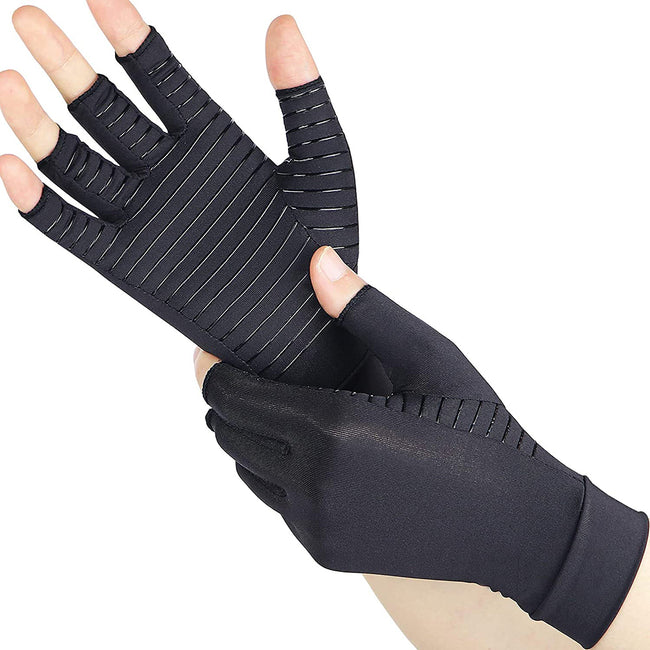
Compare our hand-support gloves and this fingerless compression-glove example by fit, coverage and fabric. Use the product’s measurements and reassess if it causes discomfort or new tingling.
When to seek medical advice
Arrange assessment for unexplained joint symptoms that persist or interfere with normal use. Seek urgent care for a suddenly very painful, swollen joint, especially if it is hot or red or you feel feverish. These are among the warning signs highlighted in NHS arthritis guidance.
Sources and further reading
Written by the ZSZBACE editorial team. Sources checked November 2026.
Products mentioned in this guide
Product details
Fingerless Copper Compression Gloves for Arthritis Pain & Stiff Hands
Comfort for stiff, aching hands
$23.99 USD
View sizes & details