
How to Wash Compression Socks and Dry Them Safely

Wash compression socks according to their own care label, rinse them thoroughly and dry them without damaging heat. Hand washing is a common option. Machine washing is appropriate only when the label allows it. A delicate cycle does not automatically make every compression garment machine washable.
The goal is to remove sweat and residue while preserving the garment’s shape and condition. Looking clean does not establish that a worn-out pair still supplies the pressure stated when it was new.
Read the label before choosing a washing method
Check the permitted water temperature, detergent restrictions and drying instructions. Instructions differ between knitted socks, zip-up stockings and garments with special bands or fastenings.
Guy’s and St Thomas’ NHS gives hand-washing or a specified delicate machine cycle for the stockings covered by its leaflet, with natural drying away from direct heat. That is useful context, but the label for your particular socks determines the method and temperature to use.
| Care question | What to do |
|---|---|
| Hand wash or machine? | Use the method the label permits; choose hand washing if that is the stated requirement |
| Which detergent? | Use the recommended type; avoid additives the label prohibits |
| Can I use fabric softener? | Do not add it when the garment instructions exclude it |
| Can I tumble-dry? | Only if expressly allowed; many compression garments require air drying |
| How often? | Follow the care schedule and account for sweat, lotions and actual use |
How to hand-wash a washable pair
- Prepare the garment. Empty pockets if present and close any zipper or fastening as instructed. Remove jewelry that could snag the knit.
- Use the allowed water temperature. Add a small amount of suitable detergent rather than a concentrated dose directly onto one area.
- Wash gently. Move the fabric through the water without aggressively stretching, twisting or scrubbing it.
- Rinse well. Continue until detergent is removed. Residue can leave the fabric unpleasant against the skin.
- Follow the drying instructions. Support the damp garment so its own weight does not stretch a narrow section.
Do not boil the socks or use bleach as a shortcut to remove odor unless the manufacturer specifically provides such instructions. If odor persists despite correct cleaning and complete drying, inspect the fabric and consider replacement.

If the label allows machine washing
Select the stated cycle and temperature. Keep the socks away from exposed hook-and-loop tabs and rough zippers that could catch the fabric. A laundry bag can help separate them from other garments, but it does not change the care requirements.
Use the correct detergent amount for the load and rinse properly. Avoid adding fabric softener or dryer sheets when the label says not to use them. Check the socks after washing rather than assuming a damaged thread is only cosmetic.
Give the socks enough time to dry
For air-dry garments, choose a ventilated place away from a radiator or other direct heat source. Do not put on a damp pair to save time. Plan around drying time if the stockings are part of a prescribed routine.
A second suitable pair can make the routine easier: one to wear and one to wash and dry. If compression is medically prescribed, keep both pairs consistent with the prescription rather than using an unrelated tighter sock as a temporary substitute.
How often should compression socks be washed?
Follow the garment instructions and your clinical plan. Dorset County Hospital recommends daily washing for the compression garments described in its patient guidance, explaining that cleaning removes skin debris and helps restore the garment’s shape. Your product label may provide a specific routine.
Allow skin lotions to absorb as instructed before putting the socks on. Keep footwear and ordinary laundry clean too; otherwise a freshly washed pair can quickly collect moisture and odor again.
Questions people ask
Will a hot wash make loose socks tighter again?
Do not use heat to deliberately shrink them. That does not restore a known pressure level and may damage the garment.
When should I replace a pair?
Follow the manufacturer’s replacement interval and clinical reviews where applicable. Replace sooner if there are holes, damaged seams, loss of shape or a fit problem that persists after correct application.
Can I keep wearing a pair that rolls down?
Do not fold or roll the top to hold it in place. Check size, length and condition. Our compression sock fit guide helps separate application problems from a poor size match.
When replacing worn garments, compare both the care label and size chart in the compression socks collection.
Sources
- Guy’s and St Thomas’ NHS — Compression stockings
- Dorset County Hospital — Applying and wearing compression garments
This guide provides general product and health information. It does not replace an individual assessment or the instructions supplied with a prescribed support.
Products mentioned in this guide
Product details
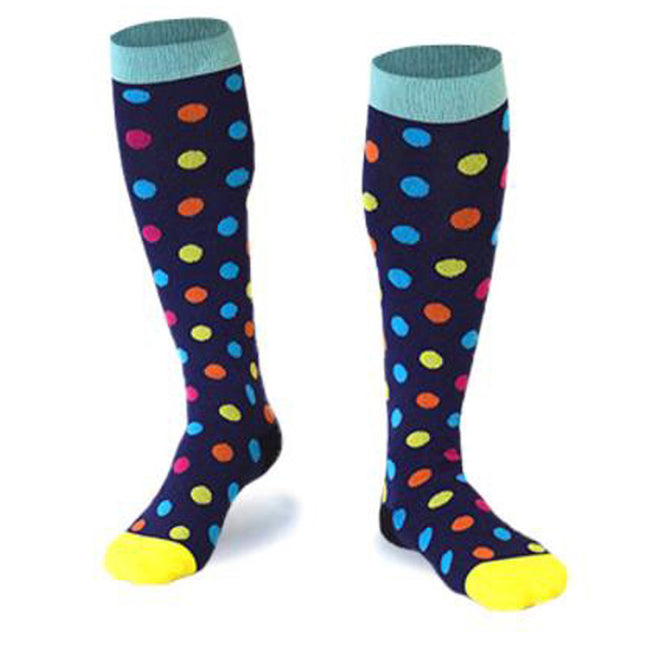
Patterned Compression Socks
15–20 mmHg knee-high compression socks for women and men, designed for circulation support and everyday comfort.
$18.99 USD
View sizes & details