
Lace-Up Ankle Brace vs Compression Sleeve: How to Choose

A lace-up ankle brace lets you adjust laces and straps around the ankle; a compression sleeve uses a continuous pull-on fabric body. The choice is about construction, fit and the support you have been advised to use. A sleeve that feels snug is not automatically equivalent to a brace designed to limit unwanted ankle movement.
For a recent injury, repeated giving-way or difficulty bearing weight, get the ankle assessed before deciding that a softer or more restrictive product is the answer.
Compare laces and sleeves
| Question | Lace-up brace | Pull-on sleeve |
|---|---|---|
| How is fit adjusted? | Laces and, on some models, crossing straps | Mainly through selecting the correct fabric size |
| How much fastening is involved? | Several adjustments before use | Usually fewer fastening steps |
| What affects shoe fit? | Laces, seams, strap layers and any side panels | Knit thickness, seams and openings |
| Can the feel be changed during fitting? | Individual fastenings may be adjusted | Limited adjustment unless the sleeve also has straps |
| What should not be assumed? | That tightening it more guarantees stability | That fabric compression provides the same restraint as a structured brace |
When a lace-up design is worth comparing
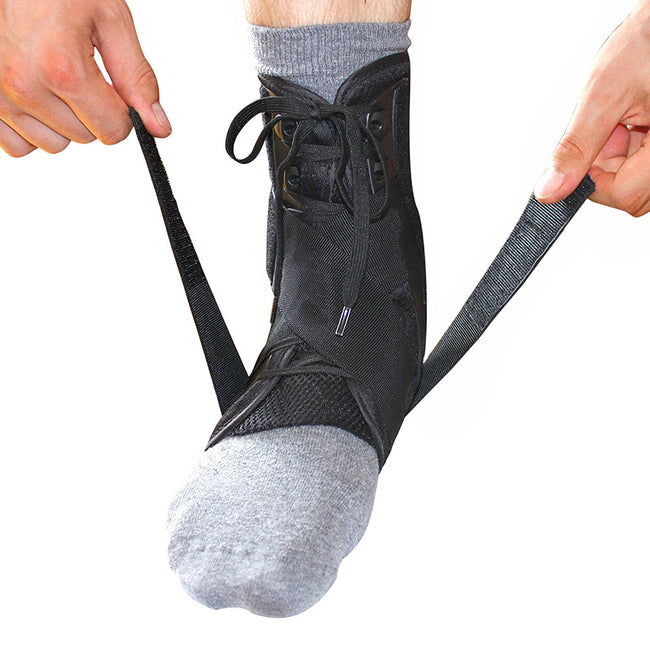
If you have been advised to use an ankle brace during return to activity, the adjustment system matters. A lace-up design can let you set the front fit and then arrange the outer straps. That may be useful when you want more control than a simple pull-on garment offers.
AAOS describes ankle rehabilitation as a progression involving movement, strength and balance work, with taping or bracing sometimes used during return to activities. Buying a brace does not replace that progression or confirm that an injured ankle is ready for sport.

When a sleeve may fit your preferences
A pull-on sleeve has fewer parts to fasten. Some people prefer that simpler construction for fabric coverage around the ankle and arch. The tradeoff is less ability to adjust individual areas if one part fits well and another feels too tight.
Check the heel and toe openings. They should align with your foot without twisting the garment. If you need to fold the sleeve to make it fit, choose a different length or model instead.

Try each option inside the shoe
A support that fits by itself may crowd the shoe. Loosen the shoe fully before putting your foot in, then refasten it around the complete setup. Check the top of the foot, heel and ankle bones for pressure.
- Your heel should be seated securely in the shoe.
- Your toes should not be pushed together by the extra layers.
- Straps should lie flat rather than bunch beneath the arch or tongue.
- No fastening should rub a hard edge into the skin.
Read how ankle braces fit with socks and shoes before adding an extra sock layer. The instructions for the brace determine whether a thin sock belongs underneath.
After the fit check, compare the fastenings and fabric care in how to clean an ankle brace. Laces, hook-and-loop tabs and knitted fabric need the care instructions for their own model.
A four-question buying check
- What has been recommended? If a clinician specified a support type, do not downgrade it just because another design is less bulky.
- Can you manage the fastenings? Consider hand strength and whether you can reach the laces comfortably.
- Does the size match the model? Some charts use circumference, others include shoe size. Use the measurements requested.
- Does it fit your footwear? A brace should not require painful shoe pressure to stay in place.
The ankle support brace collection includes several constructions. For an overview beyond these two options, see types of ankle braces and when they are used.
Questions people ask
Is a lace-up brace always stronger?
The support depends on the entire design, materials and fit. Laces describe the closure; they are not a standardized support rating.
Can I wear a sleeve underneath a lace-up brace?
Do not add a compression sleeve by default. It changes bulk and pressure. Follow the brace instructions or ask your clinician about the combination.
Can either one be worn overnight?
Overnight use is a separate decision. Our ankle brace sleeping guide explains why prescribed support and ordinary activity braces need different consideration.
Sources
This guide provides general product and health information. It does not replace an individual assessment or the instructions supplied with a prescribed support.
Products mentioned in this guide
Product details
Lace-Up Ankle Brace for Sprain Pain & Instability Support
More support for a sore or unstable ankle
$21.99 USD
View sizes & details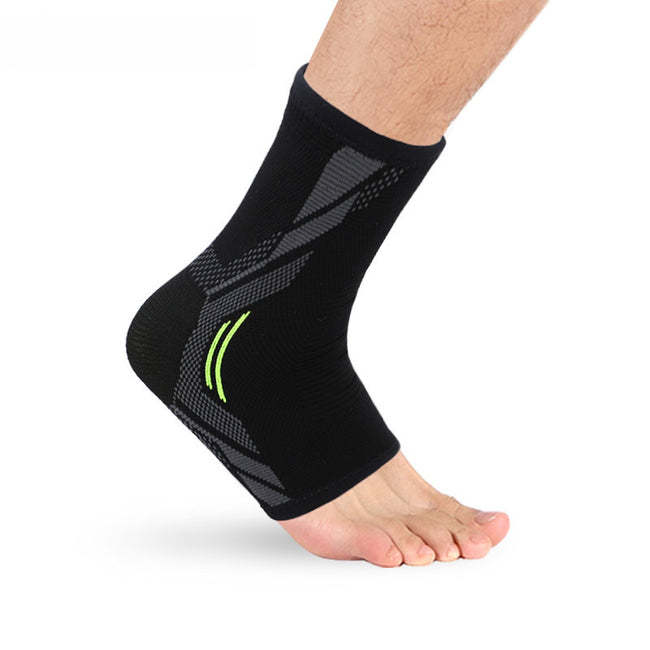
Product details
Ankle Compression Sleeve for Daily Comfort – Black Zoned-Knit
Room for the toes
$12.05 USD
View sizes & details