
Lumbar Lordosis, Swayback and Pelvic Tilt: What Changes?

Lumbar lordosis describes the inward curve of your lower spine; pelvic tilt describes the position of your pelvis. They influence one another, but they are not the same measurement. “Swayback” is a less precise term used in different ways, so it helps to ask which spinal curve or standing pattern someone means.
A visible lower-back arch is not automatically a problem. The lumbar spine normally curves inward. The practical questions are whether the shape has changed, whether it is flexible, and whether pain or difficulty moving accompanies it.

Understand the terms before trying to change your posture
| Term | What it describes | What it does not establish |
|---|---|---|
| Lumbar lordosis | The inward curve of the lower spine; some curve is normal | A diagnosis of pain or a need to flatten the back |
| Hyperlordosis | An increased lumbar curve | The cause, severity or best treatment by appearance alone |
| Anterior pelvic tilt | The pelvis tipped forward relative to its usual position | That every person has the same muscle weakness |
| Posterior pelvic tilt | The pelvis tipped backward, often reducing the lumbar hollow | That this is always a healthier posture |
| Swayback | An everyday label used for different alignment patterns | A sufficiently precise description for choosing treatment |
MedlinePlus uses swayback for an exaggerated inward lumbar curve. Some rehabilitation resources use the word for a different standing pattern. That variation is why a description such as “increased lumbar curve with forward pelvic tilt” is more useful than the label alone.
What symptoms can occur?
Some people notice an arch or prominent buttocks without discomfort. Others have lower-back aching, fatigue during standing, stiffness or difficulty finding a comfortable position. A change that appears fixed or continues to increase deserves assessment. A photo can document appearance but cannot identify which tissues are painful.
Pelvic position also changes naturally as you sit, stand, walk and bend. There is no requirement to hold one angle throughout the day. Comparing yourself with a single “perfect posture” photograph can turn ordinary variation into an unnecessary concern.
Why does the curve or pelvic position change?
Several factors may contribute, including your usual positions, hip movement, muscle capacity and the relationship between different spinal curves. In some people, a more marked curve is associated with an underlying spinal or neuromuscular condition. Spondylolisthesis, for example, involves one vertebra moving relative to another and can affect alignment.
Do not assume that a visible arch proves “tight hip flexors and weak glutes.” Those features can be assessed, but they are not a diagnosis made from appearance. Likewise, one afternoon of sitting does not establish that you have developed a spinal deformity.
What happens during an assessment?
A clinician or physical therapist can ask when the change began, what activities provoke symptoms and whether it changes with movement. Examination may include standing alignment, hip and spinal movement, strength and walking. If there are nerve symptoms, sensation and neurological function may also need checking.
Imaging is chosen when there is a reason to investigate the curve or another suspected condition. An X-ray can help show bony alignment; it is not automatically required for every visible pelvic tilt. Children with a newly noticed or marked curve should be assessed rather than given an adult retail support on the basis of a photograph.
What usually helps?
Management depends on the findings. A comfortable, flexible curve without symptoms may need no corrective treatment. When symptoms are present, a tailored plan can work on movement options, strength and the demands of your daily activities. The target can be easier standing, walking or lifting rather than forcing a particular silhouette.
A systematic review of interventions for excessive anterior pelvic tilt found limited, very low-certainty evidence. This does not mean movement practice is pointless; it means a universal exercise routine cannot be promised to fix a measured angle or resolve every related symptom.
- Vary long periods in one position with comfortable movement.
- Ask your therapist which strength or mobility findings matter in your case.
- Build activity progressively instead of repeatedly testing a painful end position.
- Track a practical outcome, such as comfortable walking time, alongside symptoms.
Two useful questions for your appointment are: “Is the curve itself a concern?” and “Which activities should my plan help me do more comfortably?” They keep the treatment goal connected to your life.
Where can a brace fit?
A specialist may recommend a particular orthosis for a defined spinal condition. Its shape, fitting and wearing schedule belong to that treatment plan. A general lumbar belt or posture corrector does not establish that it can permanently change lordosis or pelvic alignment.
If an everyday support is being considered for comfort, discuss what it is meant to help with and how you will judge whether it is useful. Do not tighten it until your natural lumbar curve disappears. You can compare coverage in our lumbar and posture supports for men, while keeping structural treatment decisions separate from product styling.
Arrange a medical review for a new fixed curve, persistent pain or symptoms affecting ordinary activities. New leg weakness needs prompt assessment. Seek emergency care now for new difficulty urinating, loss of bladder or bowel control, or numbness around the genitals or anus.
If you are comparing other support layouts, read flexible and rigid back-brace structures before choosing by appearance alone.
Frequently asked questions
Is lordosis always abnormal?
No. An inward lumbar curve is part of normal spinal shape. Hyperlordosis refers to an increased curve; whether it needs treatment depends on symptoms, flexibility, cause and progression.
Are anterior pelvic tilt and swayback the same thing?
Not reliably. Anterior tilt describes pelvic orientation. Swayback is used inconsistently and may refer to different spinal or whole-body alignment patterns. Ask for a specific description.
Should I tuck my pelvis under all day?
No. Holding an exaggerated tuck is not a general treatment for a visible arch. Comfortable movement and an individualized assessment are more useful than continually forcing the opposite position.
Can exercise change the way I stand?
Training can improve strength, movement control and confidence. Changes in static alignment vary, and evidence does not support guaranteeing that one routine corrects every pelvic angle or structural curve.
Will a back brace cure hyperlordosis?
A retail support does not establish a permanent corrective effect. If bracing is appropriate for a diagnosed condition, use the specific orthosis and follow-up plan recommended by the treating clinician.
Sources and further reading
Products mentioned in this guide
Product details
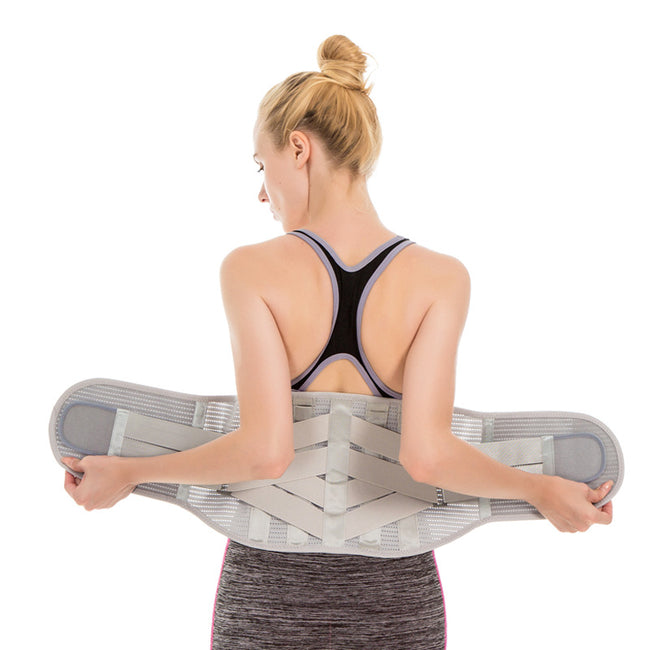
Cross-Panel Lumbar Back Support Belt with Adjustable Straps for Lower Back Pain
Support around the waist
$69.00 USD
View sizes & details