
Neck Pain and Cervical Spondylosis: Daily Care and When a Collar Fits

A stiff neck can affect more than turning your head. Reading, working at a screen and getting comfortable in bed may all become harder. Cervical spondylosis is the name for age-related changes in the neck’s discs and joints. It is common, and many people with these changes have no symptoms. The aim of care is to improve comfort and function, not to chase a perfectly “young” appearance on a scan.
How does cervical spondylosis develop?
With age, spinal discs can lose water and height, while the small joints and surrounding bone also change. Bone spurs may form. Sometimes there is less room for a nerve root or the spinal cord. AAOS explains these changes and why symptoms vary. Ordinary muscle discomfort, a recent injury and other conditions can also cause neck pain, so age alone does not establish the cause.
What symptoms are common?
Neck and shoulder aching or stiffness may come and go. Some people notice headaches beginning near the back of the neck. Long periods looking up, down or in one direction can be uncomfortable. Pain spreading into an arm, persistent tingling or weakness needs a closer assessment because a nerve may be involved.
The NHS cervical spondylosis guide describes the difference between common symptoms and more serious changes affecting the spine. Do not assume every hand symptom comes from the neck; our carpal tunnel guide explains another possible pattern.
How is the cause checked?
A clinician asks about the start of symptoms and examines neck movement, arm strength, sensation and reflexes. Balance and walking may also be checked. X-rays or other scans are selected according to the findings, rather than ordered simply because the neck clicks.
Bring a short account of the tasks that provoke pain, any previous injury, and whether symptoms extend into an arm. Mention changes in handwriting, fastening buttons or walking even if they seem unrelated to the neck.
Daily treatment usually starts with movement
Most treatment is nonsurgical. Gentle exercise, physiotherapy and suitable pain relief can help manage symptoms. Medication choices depend on your health and other medicines. Procedures or surgery are reserved for selected problems, particularly when nerve or spinal cord compression needs treatment.
For general neck pain, the NHS recommends keeping the neck moving and advises against routine collar use unless a doctor recommends it. Heat or cold may offer comfort when used safely, with a barrier protecting the skin. A pillow that supports a comfortable sleeping position may also help. Avoid driving or cycling if restricted movement makes it unsafe.
When does a soft neck collar make sense?
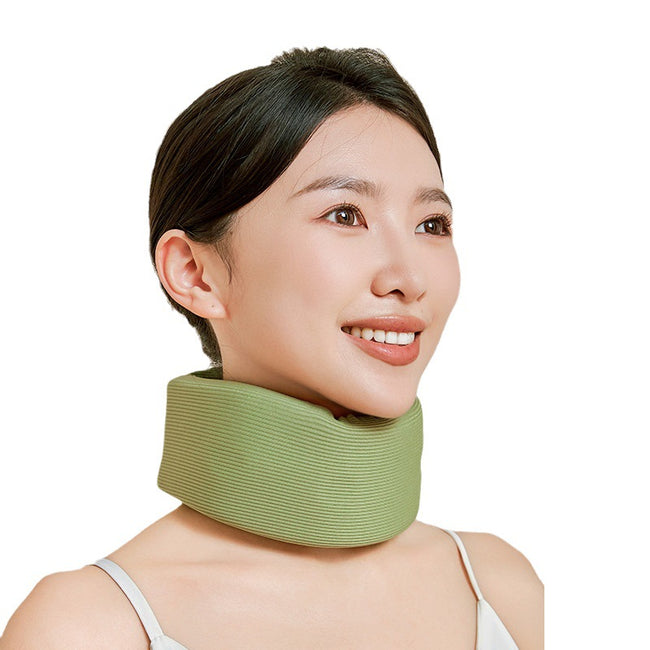
A clinician may recommend a soft collar for a short period in a specific situation. It can limit some movement and provide a resting support, but prolonged use may weaken neck muscles. A collar does not reverse wear in the discs or replace a movement and rehabilitation plan.
If short-term collar use has been advised, compare our neck support styles and the soft cervical support. Check the exact neck circumference and height measurements. A collar that is too tall may push the chin upward; a mismatched shape may feel uncomfortable around the jaw. Follow fitting instructions rather than assuming the firmest or tallest model is best.
Soft collars, rigid immobilizers, inflatable traction devices and warming wraps have different functions. Do not substitute one for another because they appear in the same collection. Confirm the intended support and wear schedule before buying.
Small changes for work, reading and rest
Set up the task so that you can look comfortably ahead without holding one position for an entire session. Raise reading material when practical, move frequently used objects closer, and alternate tasks that demand prolonged looking up or down. The goal is a workable routine with regular changes of position, not rigidly holding a supposedly perfect posture.
Keep notes on a few meaningful activities—checking traffic, reading for a short period or sleeping comfortably. Discuss persistent limitations with a physiotherapist rather than repeatedly extending collar wear.
Changes that need prompt attention
Seek prompt medical care for worsening arm or leg weakness or new neurological symptoms. New walking difficulty, loss of coordination, or bladder or bowel control changes require urgent emergency assessment. Persistent neck pain that is not improving also deserves review. These signs help distinguish everyday symptom management from a problem that needs a different plan.
Sources and further reading
Written by the ZSZBACE editorial team. Sources checked November 2026.
Products mentioned in this guide
Product details
Soft Neck Support Collar with Contoured Front & Ribbed Cover
A contoured front edge follows the under-chin area.
From $14.89 USD
View sizes & details