
Do Back Braces Help Upper Back Pain? Symptoms, Fit and Daily Support

A tight feeling between the shoulder blades after computer work is familiar to many people. The discomfort may build through the afternoon or appear when you turn to look behind you. Your next step does not have to be holding your shoulders back all day. A more useful approach combines comfortable positioning, varied movement and support matched to the task.
Symptoms and common triggers
Upper- and mid-back pain can feel like an ache, stiffness or muscle tightness around the shoulder blades. Reaching, lifting or spending a long time in one position may bring it on. Some people also notice neck or shoulder tension. Symptoms that change with movement can suggest a musculoskeletal pattern, but the location alone does not establish a diagnosis.
Long desk sessions, unfamiliar activity, carrying heavy bags and periods of inactivity can contribute. Stress and poor sleep can also affect symptoms. There is no single posture that everyone must maintain, and an occasional slouch is not proof that you have damaged your spine. Changing position regularly is more practical than trying to stay perfectly still.
How the cause is assessed
A clinician can review how the pain started, whether it follows an injury and which movements reproduce it. Assessment may include your neck, shoulders and upper back, rather than looking only at the sore spot. Many uncomplicated episodes do not need imaging. Persistent or unusual symptoms deserve review so that pain from another source is not automatically labeled a posture problem.
What treatment can include
For muscular discomfort, care often focuses on regular movement, comfortable stretches and gradually building strength. Heat may help relax a tight-feeling area. A physiotherapist can help select movements if you are unsure what feels appropriate. The aim is to make sitting, reaching and working easier, while improving your capacity for those activities over time.
Can a posture corrector be useful?
A posture brace can provide a physical reminder when your shoulders drift forward during a task. That cue may help you notice your position and change it yourself. This is a practical reason some people find a brace useful during desk work or light standing activities. It is not a way to force the spine into a permanent new shape.
Look for comfortable straps, manageable adjustment and coverage that matches where you want support. A full-back posture brace combines shoulder straps with a back panel and lumbar wrap, whereas a waist-only belt leaves the shoulders free. Begin with brief daytime use and pair it with movement and strengthening. Loosen or remove it if the straps pinch, create numbness or hold you in an uncomfortable position.
Build comfort into the task
- Computer work: put the screen in front of you, with its top around eye level. Keep the mouse within easy reach and the keyboard low enough for relaxed shoulders.
- Laptop sessions: for longer work, a separate keyboard and mouse let you raise the screen without raising your hands.
- Reading and hobbies: bring the work toward you when possible, rather than repeatedly leaning far forward to see it.
- A long afternoon: use natural pauses to stand, walk or change tasks. A brace can be a reminder to adjust; the break provides the movement.
Compare the coverage you actually need
- Breathable Mesh Upper Back Posture Corrector: shoulder and upper-back contact with less waist coverage.
- Adjustable Posture Corrector with Waist Strap: compare how the waist anchor and shoulder straps sit together.
- Cross-Strap Full-Back Posture Corrector: connected upper-back and waist support; check torso length and seated comfort.
At the desk, reach for the mouse, turn, stand and sit before deciding the fit is right. More tension will not fix a panel that digs in. Check the measuring guide and clothing-layer guide.
A small crossover study in healthy students found muscle-activity changes during a 30-minute typing task, but no significant immediate pain or fatigue improvement. It does not establish long-term pain relief. Judge support by useful comfort and movement rather than promised permanent correction.
Compare posture supports, or read about rounded shoulders versus kyphosis. A retail posture brace is not a cervical immobilizer or a prescribed fracture orthosis.
When to get medical help
Get assessed if upper-back pain persists, worsens, follows an injury or disrupts normal activities. Seek urgent help for severe constant pain with feeling unwell, new walking difficulty or limb weakness. Back pain with chest pain, significant breathing difficulty, new bladder or bowel changes, or numbness around the genitals requires emergency assessment rather than a posture adjustment.
Sources and further reading
- Leeds Community Healthcare NHS: Mid and Upper Back Problems
- Hospital for Special Surgery: Do Posture Correctors Work?
- HSE: Workstation Posture and Setup
- Leung et al.: Shoulder/Scapular Brace During Prolonged Typing (2023)
Written by the ZSZBACE editorial team. Sources checked November 2026.
Products mentioned in this guide
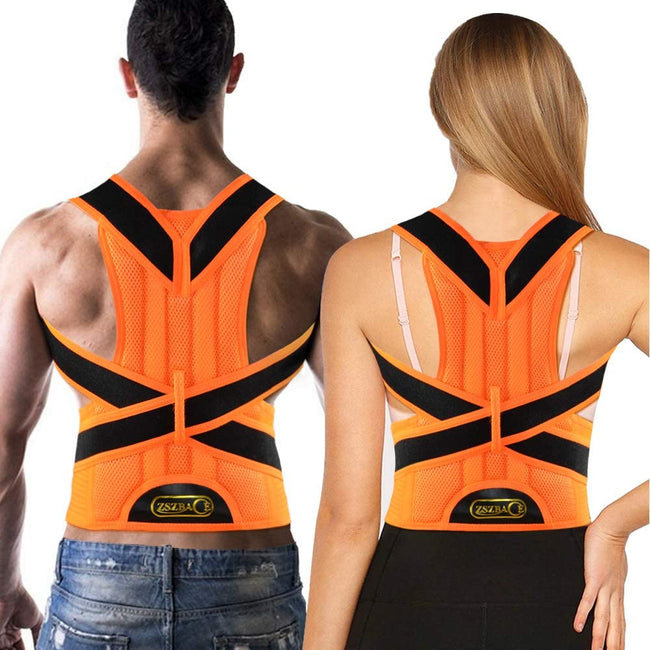
Product details
Full Back Posture Corrector for Back Pain & Slouching
Two support bars, plus lumbar coverage
$36.00 USD
View sizes & details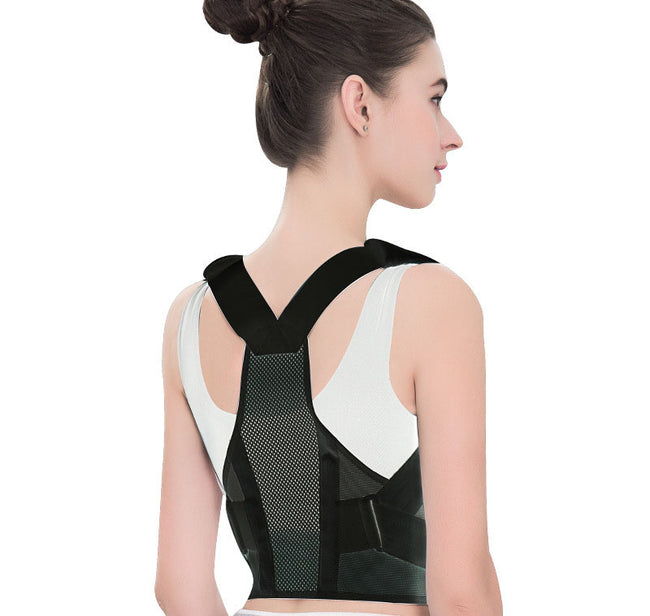
Product details
Breathable Mesh Upper Back Posture Corrector for Men & Women, XS–XL
Breathable mesh comfort
$73.00 USD
View sizes & details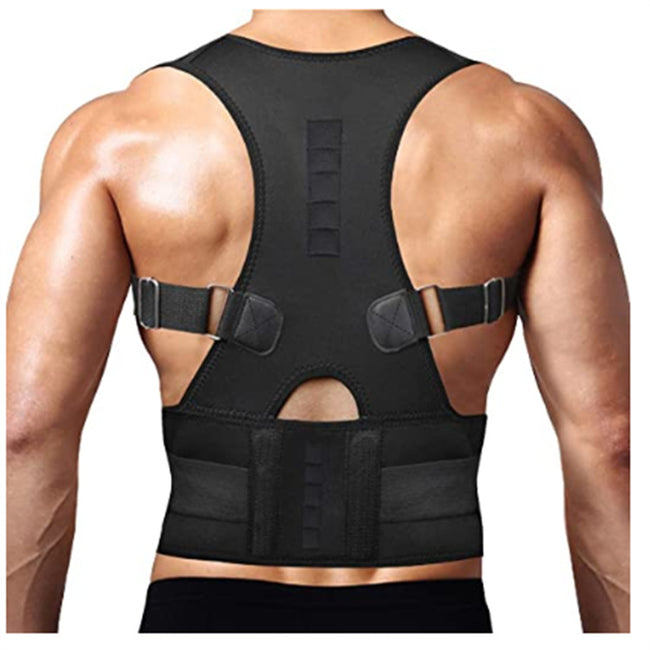
Product details
Adjustable Full Back Posture Corrector with Buckle Straps & Waist Band
Controlled strap adjustment
$25.00 USD
View sizes & details