


Rainbow Heart on Blue Compression Socks
Rainbow Heart on Blue Compression Socks
Rainbow Heart on Blue styling in a knee-high, closed-toe design.
- Compression Sock
- Coverage: Calf, Ankle, Foot
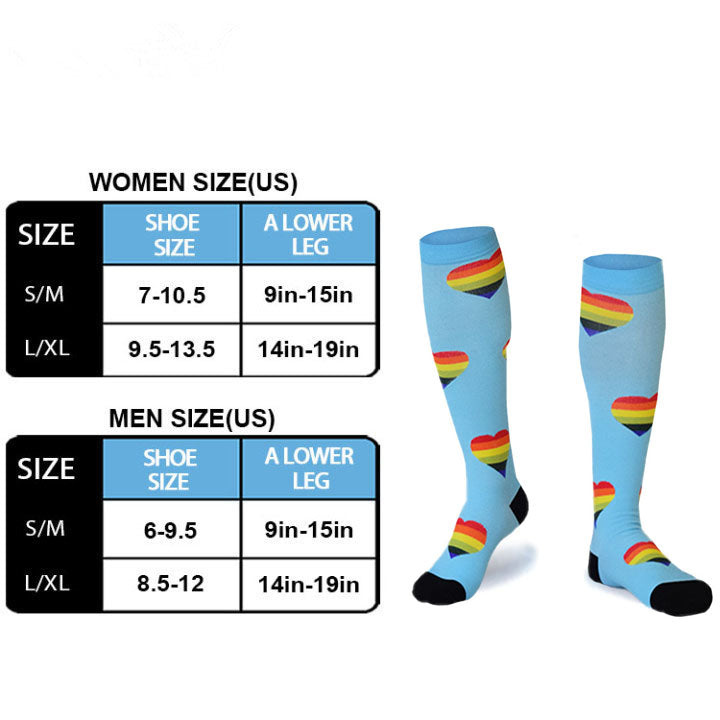
Size Guide — measure before you choose
Measure around the widest part of your calf and compare that measurement with the shoe-size range. Both size ranges overlap; contact us if your measurements point to different sizes.
| Size | Women's US shoe size | Men's US shoe size | Calf circumference (in) |
|---|---|---|---|
| S/M | 7–10.5 | 6–9.5 | 9–15 |
| L/XL | 9.5–13.5 | 8.5–12 | 14–19 |

Check the selected size, color, side and quantity before adding to cart. Photos may show more than one option.
Check your selected size and option before adding to cart.
Couldn't load pickup availability
Shipping
Shipping
Delivery depends on your destination and the selected option. Please review our shipping policy for processing and transit information.
Returns
Returns
If the fit is not right, contact us before sending an item back. Eligibility, deadlines and return shipping costs are explained in our returns policy.
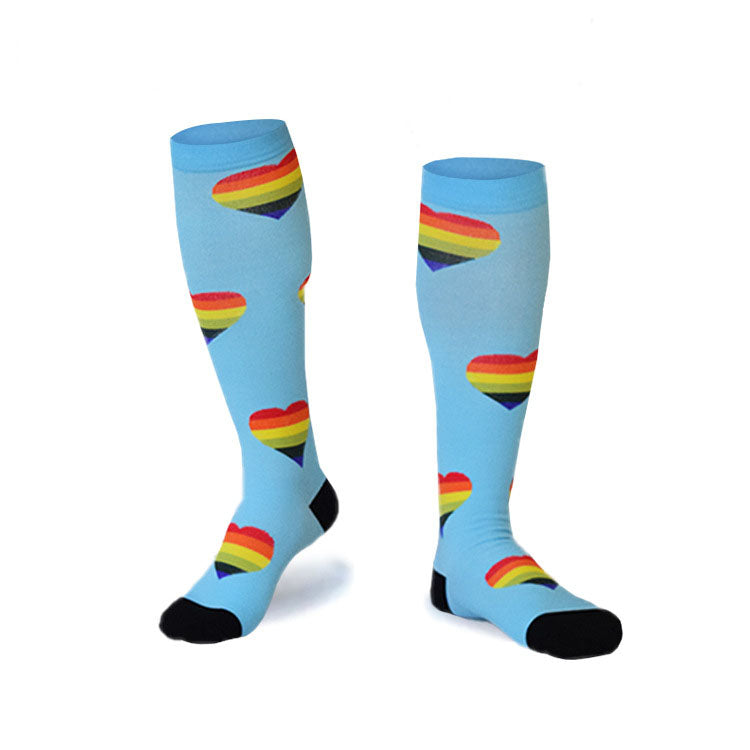
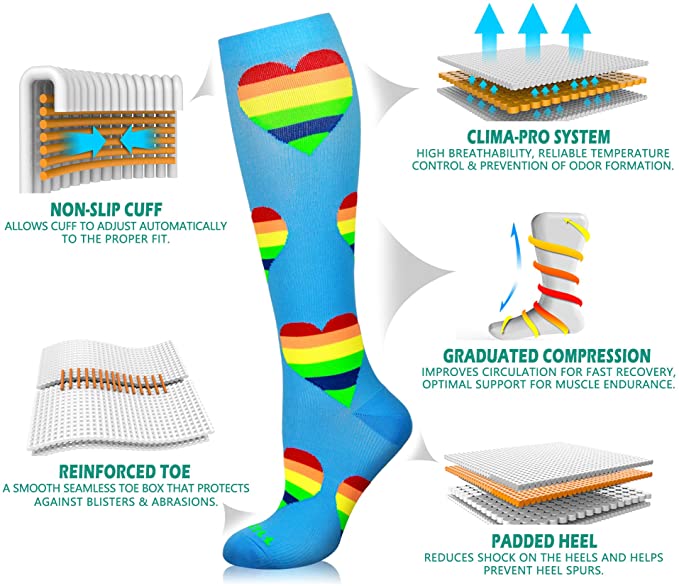
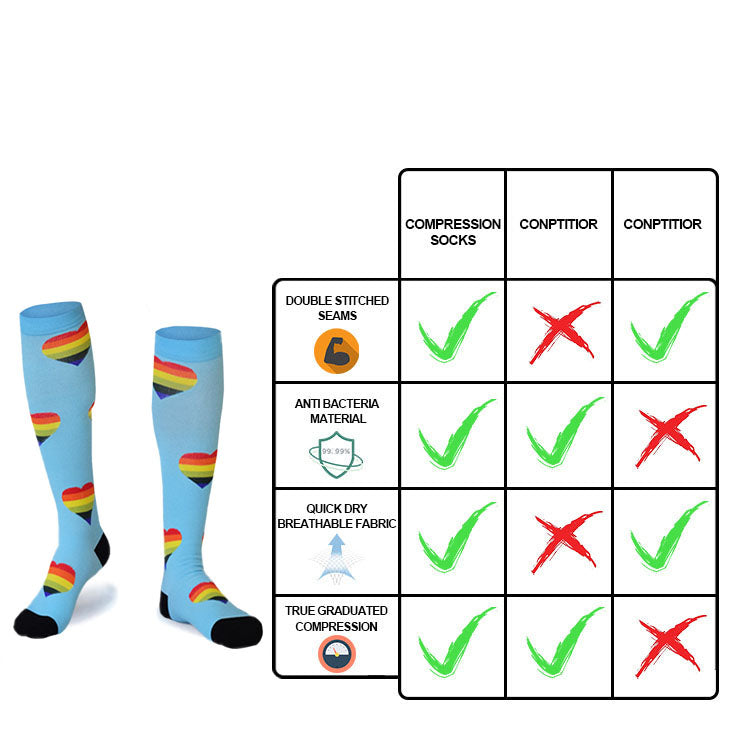
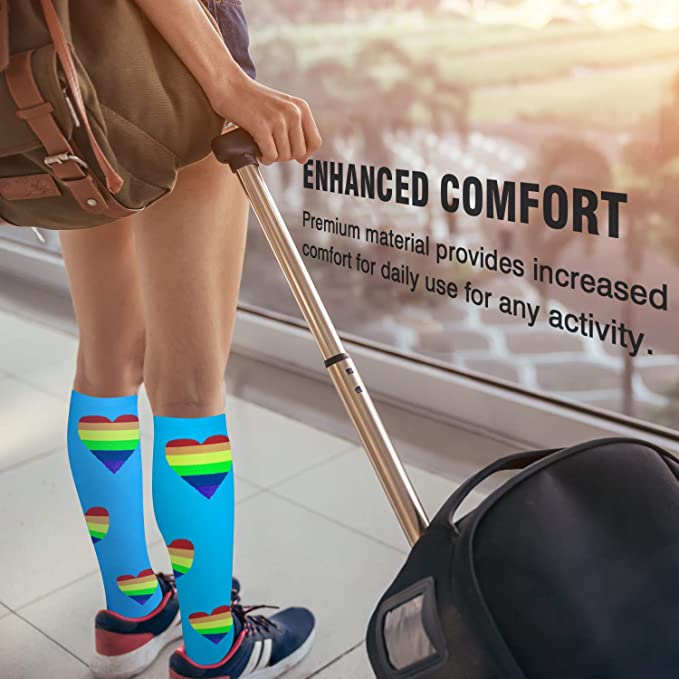
Rainbow Heart on Blue styling in a knee-high, closed-toe design.
Choose your preferred leg coverage and toe design, then match the size to your measurements. This compression-sock style covers the foot as well as the lower leg, unlike a footless calf sleeve.
Coverage & Construction
Foot and lower leg.
Choose socks when you want the foot covered as well as the calf; compare toe design and length before selecting a pattern.
Design & Adjustment
- Knee-high length: The leg section extends toward the knee.
- Closed-toe design: A fabric toe section covers the front of the foot.
- Patterned design: Use the selected option and product images to choose the pattern you prefer.
Product Specifications
| Detail | Specification |
|---|---|
| Design | Rainbow Heart on Blue Compression Socks |
| Coverage | Foot and lower leg |
| Construction | Knee-high length, Closed-toe design, Patterned design |
| SIZE options | S/M, L/XL |
Size & Fit
Measure around the widest part of your calf and compare that measurement with the shoe-size range. Both size ranges overlap; contact us if your measurements point to different sizes.
| Size | Women's US shoe size | Men's US shoe size | Calf circumference (in) |
|---|---|---|---|
| S/M | 7–10.5 | 6–9.5 | 9–15 |
| L/XL | 9.5–13.5 | 8.5–12 | 14–19 |
Check the selected size, color, side and quantity before adding to cart. Photos may show more than one option.
How to Wear
- Gather the sock down toward the heel before putting it on.
- Place the foot and heel correctly, then ease the fabric up the leg in small sections.
- Smooth out wrinkles without pulling hard on the top edge.
- Keep the top band flat rather than folding or rolling it down.
Compare Similar Styles
- Open-Toe Knee-High Compression Socks: Consider this option if you prefer open-toe design, pull-on construction. Compare the size guide on its own product page.
- Plain Black Calf Support Sleeves: Choose this style when you prefer calf coverage with your own socks.
Explore Related Collections
Care & Washing
Close hook-and-loop tabs, zippers and other closures before washing. Hand wash in cool or lukewarm water with mild soap, rinse thoroughly and air-dry away from direct heat. Do not bleach, tumble-dry, iron or use fabric softener. Follow the sewn-in care label if it gives different instructions.
Shipping & Returns
Check checkout for the delivery estimate for your address and selected option. See our shipping policy for details. If the size is not right, review the return policy and contact us before sending the item back.