
How to Protect Your Knees Better During Sports and Daily Activity
Your knees carry a lot of load every day, especially when you run, jump, squat, climb stairs, or train on hard ground. The best way to protect them is not one single trick, but a combination of smart warm-ups, good technique, proper pacing, and the right support when needed.
If you already feel discomfort, it is worth also reviewing our guide on how to protect the knee better and learning the basics of knee protection during exercise before your next workout.
Why knees get stressed so easily
The knee is a load-bearing joint that helps you bend, straighten, stop, turn, and absorb impact. Because it does so many jobs at once, it can be stressed by overuse, sudden direction changes, poor landing mechanics, or training on surfaces that are too hard or too uneven.
Common situations that can increase stress include:
- Running, especially when pace or mileage increases too quickly
- Jumping sports like basketball or badminton
- Cutting and twisting sports such as football or taekwondo
- Downhill hiking or mountain climbing, where the knee must absorb extra force
Practical ways to protect your knees
1. Warm up before activity
Cold muscles and stiff soft tissue do not move as smoothly. A short warm-up helps your body prepare for exercise and can make movement feel more controlled. Start with light walking, easy mobility work, or gentle dynamic movements before training.
2. Increase training gradually
Many knee problems come from doing too much, too soon. If you are starting a new sport or returning after a break, increase time, distance, intensity, or jumping volume step by step instead of all at once.
3. Pay attention to technique
Bad landing patterns, collapsing knees, or sudden twisting under load can add stress. Focus on controlled movement, stable foot placement, and proper alignment during squats, lunges, jumps, and turns.
4. Choose the right surface
Extremely hard, slippery, or uneven ground can make the knee work harder. When possible, train on surfaces with a more balanced amount of support and cushioning.
5. Recover after exercise
Cool down with light movement and simple stretching so your muscles can relax after training. If your knees feel sore after repeated sessions, reduce intensity and allow more recovery time.
When knee support may be useful
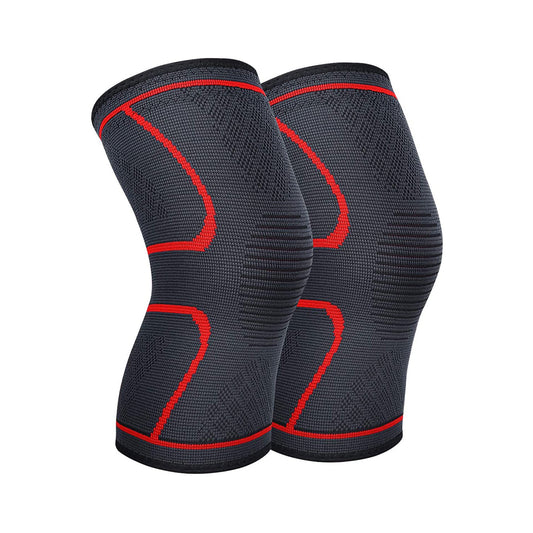
Knee support is not a substitute for good training habits, but it can be helpful in some cases. People who are returning to exercise after discomfort, or who want extra stability during sports, sometimes choose a brace or support sleeve for added confidence during movement.
If you are looking for a simple option to support your training, you can explore our knee brace collection for more choices.

Knee Brace Collection
A practical place to compare knee support options for sports, training, and everyday stability.
Why it may help: Useful if you want added support while staying active, especially during higher-impact movement.
Shop the collection
Common mistakes to avoid
- Skipping warm-ups before running or jumping
- Increasing workout volume too quickly
- Training through sharp or worsening pain
- Ignoring recovery after long or intense sessions
- Using poor technique on turns, landings, or downhill movement
If pain becomes sharp, swelling appears, or your knee feels unstable, stop training and seek medical advice. Support can help with comfort and confidence, but it should not replace proper diagnosis when an injury is suspected.
Quick checklist for knee-friendly training
- Warm up first
- Start with manageable intensity
- Move with control
- Train on safer surfaces when possible
- Recover after exercise
- Use knee support only when it fits your activity and needs
FAQ
Should I wear a knee brace for every workout?
Not always. A knee brace may be helpful if you want extra support or are returning to activity, but many people can train safely without one when they warm up well, progress gradually, and use good form.
What sports are hardest on the knees?
Sports with frequent jumping, sprinting, cutting, or twisting tend to place more stress on the knees. Basketball, football, taekwondo, badminton, running, and downhill hiking are common examples.
How do I know if my knees need more protection?
If your knees feel sore during or after exercise, if you are increasing training intensity, or if you are returning after discomfort, extra support and smarter pacing may be helpful. Persistent pain should be checked by a medical professional.
Is walking bad for the knees?
Walking is often a low-impact activity, but long distances, poor footwear, steep hills, or hard surfaces can still create strain. The key is pacing, comfort, and recovery.
For readers who want to continue exploring support options, the knee brace collection is the best next step.