
How to Help Prevent Waist Injuries During Weight Lifting
Waist and lower-back strain during weight lifting usually happens when fatigue, poor bracing, rushed progression, or sloppy positioning come together. The good news is that many gym-related waist injuries are preventable. In most cases, the best protection comes from a combination of proper warm-up, controlled technique, smart programming, and knowing when extra support may help.
If you lift regularly, think of injury prevention as a habit rather than a single fix. A belt, better posture, and more careful load selection can all help, but none of them can fully make up for poor movement or training through pain.
Why waist injuries happen in weight lifting
The waist area takes on a lot of stress during exercises such as squats, deadlifts, rows, overhead presses, and carries. Risk tends to rise when:
- You start lifting heavy without warming up properly.
- You lose abdominal bracing as the set gets harder.
- You round, twist, or overextend under load.
- You increase training weight too quickly.
- You keep training even though the area already feels strained or fatigued.
- Your recovery, sleep, or exercise spacing is poor.
For many lifters, the issue is not one dramatic mistake. It is usually several smaller mistakes repeated over time.
Start with a better warm-up
A short general warm-up is often not enough before heavy lifting. Give yourself enough time to raise body temperature, loosen up stiff areas, and prepare your core and hips for loaded movement.
A practical pre-lift warm-up may include:
- 5-10 minutes of light movement to get warm.
- Dynamic mobility for the hips, hamstrings, and upper back.
- Core activation and bracing practice.
- Several lighter ramp-up sets before your working weight.
If you train in colder weather or tend to feel stiff, spend a little longer getting ready. The goal is not to exhaust yourself before lifting, but to feel mobile, alert, and stable.
Protect your waist with better lifting mechanics
One of the simplest ways to reduce strain is to stay disciplined with technique. That means keeping your torso position appropriate for the lift, avoiding sudden jerking, and maintaining tension through the midsection.
Key form reminders:
- Brace before you move: Create abdominal tension before the rep starts.
- Keep the load close: A barbell or weight drifting away from your body increases strain.
- Avoid chasing range you cannot control: Depth and range of motion should match your mobility and stability.
- Do not sacrifice posture for extra reps: The last few reps are often where form breaks down.
- Use controlled tempo: Fast, loose reps can overload the waist unexpectedly.
If your technique changes every time the load gets heavy, that is a sign to reduce the weight and rebuild consistency first.
Load management matters as much as form
Even good form can break down when the training load is poorly managed. A common mistake is jumping too quickly from moderate work to heavy work without enough adaptation time.
To lower your risk:
- Increase weights gradually instead of making big jumps.
- Space out demanding lower-body and pulling sessions when needed.
- Pay attention to accumulated fatigue, not just one hard workout.
- Use deloads or lighter sessions when your back and waist feel overworked.
- Stop a set when you cannot maintain position safely.
Progress is usually more sustainable when training stress rises in small, manageable steps.
When a weightlifting belt may help
A weightlifting belt can be useful during heavier training because it gives you a surface to brace against and may help you feel more stable through the lower back and abdominal area. For some lifters, that extra feedback is especially helpful during squats, deadlifts, and other compound lifts.
That said, a belt is best used as a support tool, not as a substitute for solid mechanics. If you cannot brace well without a belt, the long-term fix is still technique practice, core control, and better load selection.

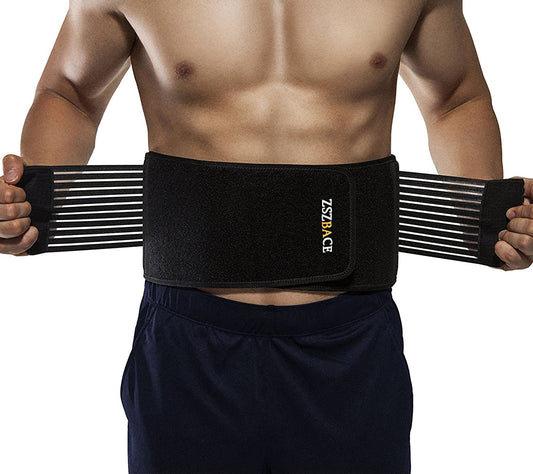
Weightlifting Belt
Extra support for heavy training days when you want more stability while bracing.
Why it may help: A practical option for lifters who want added support during demanding sets, especially for squats, deadlifts, and similar compound movements.
View the Weightlifting Belt
Common mistakes that increase injury risk
Many waist injuries happen outside of the actual lift setup. Watch for these common problems:
- Skipping warm-up sets: Going straight to working weight is risky.
- Training through sharp pain: Discomfort from effort is different from injury pain.
- Letting fatigue decide your form: End sets early when positioning falls apart.
- Using support gear too late: If you plan to use a belt for top sets, use it before technique breaks down.
- Ignoring recovery: Tightness, poor sleep, and repeated heavy sessions can all add up.
What to do if your waist already feels strained
If you notice a new strain, reduce or stop the aggravating exercise instead of pushing through it. Continuing to train hard on a fresh injury can make recovery take longer and may lead to repeated irritation.
In general, it is wise to:
- Pause movements that trigger pain.
- Reduce intensity and volume until symptoms settle.
- Return gradually instead of jumping back to previous loads.
- Use supportive gear cautiously if it helps you feel more stable during a phased return.
- Seek medical advice promptly if pain is severe, persistent, radiates, or affects daily movement.
If pain is ongoing or worsening, professional evaluation is the safest next step.
A simple checklist before heavy sets
- Did you warm up enough to feel mobile and ready?
- Can you brace before the first rep?
- Are you using a weight you can control?
- Does your form stay consistent through the full set?
- Are you stopping before fatigue turns the rep unsafe?
Those basics prevent more problems than most lifters realize.
Final takeaway
To better prevent weight-lifting waist injuries, focus on what you can control every session: warm up properly, brace well, use sound technique, increase loads gradually, and stop early when pain or fatigue changes your movement. A belt can be a helpful addition for heavy training, but your best long-term protection is still good lifting habits.
FAQ
Should I wear a lifting belt for every workout?
Not necessarily. Many lifters use a belt mainly for heavier compound lifts or top sets. For lighter work, technique practice, and accessory training, many people train without one.
Can a belt prevent all waist or lower-back injuries?
No. A belt may provide added support and help with bracing, but it cannot fully prevent injury if your form, load selection, or recovery are poor.
What is the biggest cause of waist strain during lifting?
It is often a combination of poor bracing, fatigue, and lifting more than you can control with solid technique.
Should I keep lifting if my waist hurts?
If pain is sharp, worsening, or changes how you move, stop the aggravating exercise and reassess. Persistent or significant pain should be evaluated by a qualified medical professional.