How to Prevent a Sprained Ankle When Playing Basketball
Basketball is full of quick cuts, jumps, rebounds, and awkward landings, so ankle sprains are one of the most common injuries on the court. The good news is that you can lower your risk with the right shoes, a proper warm-up, better movement habits, and extra support if your ankles tend to feel unstable.
If you do roll an ankle, stop playing immediately and assess the injury before deciding what to do next.
Why ankle sprains happen so often in basketball
Most basketball ankle sprains happen when a player lands on another player's foot, changes direction too quickly, or loses footing on a slick surface. These movements can force the ankle to roll inward or outward beyond its normal range.
Your risk can be higher if you:
- Skip warm-ups
- Wear worn-out or poorly fitting shoes
- Play on dusty, wet, or slippery courts
- Have a history of ankle sprains
- Feel ankle weakness or instability when cutting or landing
How to help prevent a sprained ankle
1. Wear basketball shoes that fit and support your movements
Choose basketball shoes that fit securely through the heel and midfoot so your foot is not sliding inside the shoe. Good court shoes can also help with traction and shock absorption, which may reduce the chance of awkward slips or unstable landings.
Shoes alone cannot prevent every injury, but playing in the wrong footwear definitely increases risk.
2. Warm up before you play
Do not go straight from sitting to full-speed play. A short warm-up helps prepare your ankles, calves, knees, and hips for jumping and cutting.
A simple pre-game warm-up can include:
- Light jogging or skipping
- Ankle circles
- Calf raises
- Bodyweight squats
- Short lateral shuffles
- A few controlled jumps and landings
The goal is to get your body ready for the specific demands of basketball, not just to break a sweat.
3. Use socks and lacing that keep your foot from sliding
Socks should be comfortable, breathable, and secure enough that your foot does not slide around inside the shoe. Pair that with snug lacing so your heel stays in place during hard stops and direction changes.
4. Improve landing and cutting habits
Many sprains happen during uncontrolled movements. Try to stay aware when landing in traffic, boxing out, or contesting rebounds. Avoid stepping onto another player's foot, and focus on balanced landings whenever possible.
Good habits include:
- Landing with control instead of off-balance
- Keeping your eyes up in crowded paint situations
- Not rushing into slippery spots on the floor
- Backing off if the surface is wet or unsafe
5. Consider extra ankle support if you have a history of sprains
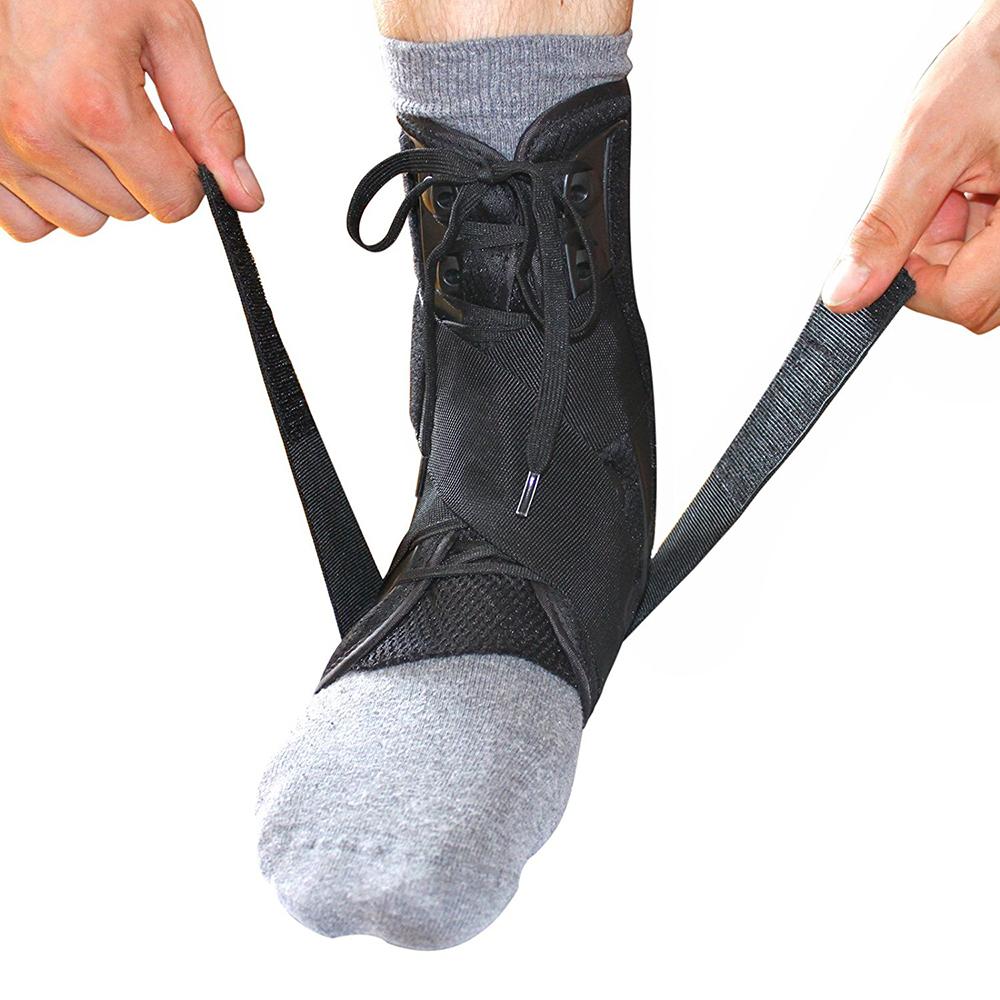
If you have previously rolled an ankle, extra support may help you feel more stable during play. Some players use taping, while others prefer a brace they can adjust before practice or games.
For players who want removable support, an ankle brace support option can be a practical next step, especially if the ankle feels vulnerable during cuts, jumps, or return-to-play sessions.

Ankle Brace Support
Helpful extra support for players who want more ankle stability during basketball movement.
Reason: a sensible next step for athletes with a history of ankle sprains or ankle instability.
Mistakes that raise your risk of ankle injury
Even experienced players make small choices that raise the chance of a sprain. Common mistakes include:
- Playing without warming up
- Using shoes with poor traction or broken-down support
- Returning too soon after a previous ankle injury
- Ignoring mild ankle pain or repeated rolling episodes
- Playing outdoors in rain, snow, or on slick surfaces
If the court conditions are unsafe, it is smarter to move play indoors or skip the session than risk an avoidable injury.
What to do immediately after an ankle sprain
If you sprain your ankle during basketball, stop playing right away. Continuing to run or jump can make the injury worse.
- Get off the court and rest. Sit or lie down and keep weight off the injured ankle.
- Elevate the ankle. Raise the foot above heart level if possible to help limit swelling.
- Apply a cold compress. Use an ice pack or cold towel for about 15 to 20 minutes at a time, then remove it before repeating later. Do not put ice directly on bare skin.
- Use light compression if appropriate. A wrap or supportive brace may help reduce movement and swelling, but it should not feel dangerously tight.
These steps can help with early swelling and pain, but they do not replace professional evaluation when the injury seems serious.
When it may be more than a sprain
Some ankle injuries can involve a fracture or more significant tissue damage. Get medical care as soon as possible if you notice any of the following:
- Visible deformity
- Severe swelling right away
- Intense tenderness over the ankle bones
- Inability to bear weight
- Bruising that spreads quickly
- A popping sensation with major loss of function
If you suspect a fracture, do not try to play through it. Immobilize the area as best you can and seek medical attention promptly.
How to know when ankle support may be worth using
Ankle support is not a substitute for strength, balance, and proper rehab, but it may be useful in certain situations:
- You have a previous history of ankle sprains
- Your ankle feels unstable during games
- You are getting back to basketball after a mild sprain
- You want extra confidence during cutting and jumping
If that sounds familiar, browsing ankle brace support options may help you decide whether a more supportive setup fits your playing routine.
Final takeaway
The best way to prevent a sprained ankle in basketball is to combine smart preparation with better on-court habits: wear proper shoes, warm up, pay attention to landing space, avoid unsafe surfaces, and use extra support if your ankle has a history of rolling.
If you do get hurt, stop playing, manage swelling early, and seek medical attention when symptoms suggest something more serious than a mild sprain.
FAQ
Can basketball shoes prevent ankle sprains?
They can help support your foot and improve traction, but they cannot eliminate the risk. Warm-ups, landing mechanics, court awareness, and injury history all matter too.
Should I play basketball with a sore ankle?
It depends on the cause and severity, but playing through pain can make an injury worse. If the ankle is swollen, unstable, or painful with weight-bearing, it is better to stop and assess it properly.
Is a brace better than tape for basketball?
Some players prefer tape, while others like a brace because it is easier to put on and adjust. The best choice depends on comfort, fit, and how much support you need.
When should I see a doctor after rolling my ankle?
Seek medical care if you cannot bear weight, have major swelling or bruising, notice deformity, or suspect a fracture.