
How to Protect Ankles When Running: Practical Tips for Better Support
If you want to know how to protect ankles when running, the short answer is: warm up well, build ankle strength and mobility, keep your running form under control, and use supportive gear when your ankles need extra stability.
Ankles work hard with every step. When they are stiff, weak, or overloaded, running can feel less stable and may lead to soreness, swelling, or a higher chance of a sprain. The good news is that a few simple habits can make a big difference.
1. Start with a proper warm-up
A cold start puts extra stress on your lower legs and ankles. Before you run, spend 5 to 10 minutes warming up with easy movement such as brisk walking, light jogging, ankle circles, and calf raises.
Dynamic warm-ups help your joints move more freely and prepare your muscles for impact. If your ankles usually feel stiff at the start of a run, this is one of the easiest places to begin.
2. Improve ankle mobility and strength
Stronger, more mobile ankles usually handle running better. Simple drills like calf stretches, toe raises, balance work, and gentle ankle rotations can help you feel more stable.
Mobility work is especially useful if you sit for long periods, run on uneven ground, or often feel tightness in your calves and feet. Massage tools such as a foam roller can also be helpful for loosening the lower leg before or after training.
3. Pay attention to running form and terrain
Overstriding, landing too heavily, or running with very stiff ankles can increase impact. Try to keep your steps controlled and relaxed rather than forcing long strides. If you are a newer runner, easy pace and good mechanics matter more than speed.
Surface also matters. Uneven sidewalks, loose gravel, and slanted roads can increase ankle stress. If possible, choose flatter routes while you build strength and confidence.
4. Use ankle support when you need extra stability
Some runners benefit from wearing support during training, especially if they have a history of sprains, feel unstable, or are returning to activity after a minor injury. Support gear should feel secure without being so tight that it cuts off comfort or movement.
For a practical option, you can look at a supportive brace such as Lace-Up Ankle Brace. It is a useful example of a wrap-style support that can be considered when you want a more structured fit.

Lace-Up Ankle Brace
Adjustable ankle support with a secure lace-up fit.
Why it may help: A structured brace can be useful for runners who want a more secure feel during training or recovery.
Another helpful option is Adjustable Ankle Brace, which is a lower-profile style for runners who want wrap-around support with everyday comfort.

Adjustable Ankle Brace
Adjustable breathable ankle wrap for support, sprains, and everyday stability.
Why it may help: A wrap-style brace can be a practical option for runners who want flexible support without a bulky feel.
5. Consider compression socks for broader lower-leg support
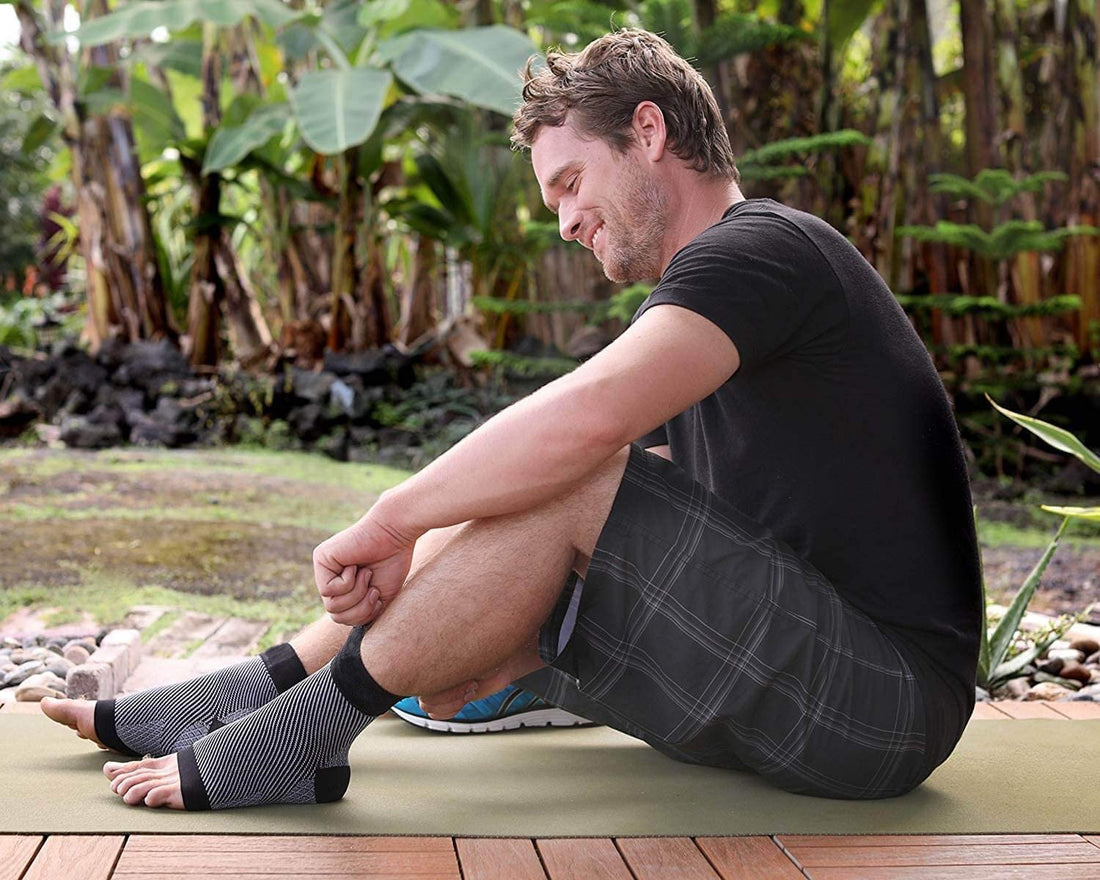
If your ankles feel tired because your calves and feet are doing a lot of work, compression socks may be a good next step. They do not replace proper training or rehab, but some runners like the extra support and comfort.
You can also explore the running compression sock boost performance collection for more options designed for runners.
6. Know when to scale back
Protecting your ankles is not only about gear. It also means knowing when to reduce load. If you feel sharp pain, swelling, repeated rolling, or pain that worsens as you run, it is better to stop and reassess than to push through.
When in doubt, rest, reduce mileage, and return gradually. If symptoms keep coming back or walking becomes uncomfortable, speak with a qualified health professional.
Common mistakes runners make
- Skipping warm-ups before harder runs or speed sessions.
- Doing too much too soon, especially after time off.
- Ignoring ankle stiffness until it becomes pain.
- Running every session on uneven terrain when the ankle is already irritated.
- Choosing support that is either too loose or too restrictive.
What to look for in ankle support
If you decide to use ankle support, look for a fit that feels secure, comfortable, and appropriate for your activity. A runner-friendly option should not slide around, pinch, or make your stride feel unnatural.
If you want to compare more support options, the ankle support brace essential protection collection is a helpful place to start.
Related reading
- right way wear ankle brace running
- should you run ankle brace
- way support ankle exercising
- how wear ankle support sock
FAQ: how to protect ankles when running
How do I protect my ankles when running?
Warm up first, strengthen your calves and ankles, run with controlled form, and use support if you need extra stability. If your ankle feels painful or repeatedly unstable, reduce training load and reassess.
Should I run with an ankle brace?
An ankle brace can be helpful for some runners, especially if they want extra support during return-to-run periods or if they have a history of sprains. The best choice depends on comfort, activity level, and how much support you need.
Does compression help ankle support running?
Compression can feel supportive and may help some runners with comfort and lower-leg fatigue. It is not a substitute for strength, mobility, or proper training, but it can be a useful part of your setup.
What is the best way to prevent ankle sprains while running?
Build ankle strength, avoid sudden mileage jumps, choose safer surfaces when possible, and keep your warm-up consistent. Good footwear and sensible pacing also matter.
If you are looking for next-step shopping guidance, the ankle support brace essential protection collection and the running compression sock boost performance collection are useful places to compare options.