Should I Wear an Ankle Brace While Sleeping or Overnight?
If you are wondering, can you sleep with an ankle brace on? The short answer is: sometimes, yes—but it depends on why you are wearing it, how much support you need, and whether your doctor has given you specific instructions.
For many mild to moderate ankle sprains, sleeping with an ankle brace may help limit awkward twisting at night, provide light support when getting out of bed, and make the ankle feel more protected. But an ankle brace should not be so tight that it causes numbness, tingling, extra pain, or changes in skin color.
If you are still deciding what kind of support makes sense for your situation, you can browse the ankle support brace collection for different brace styles and support levels.
When sleeping with an ankle brace can make sense
Overnight wear is usually most helpful when your ankle feels unstable or vulnerable to accidental movement. Common situations include:
- Recent ankle sprain: especially if you tend to roll your ankle when changing positions in bed.
- Morning pain or stiffness: some people feel better when the ankle has gentle support overnight.
- Getting up during the night: a brace can make those first few steps to the bathroom feel more secure.
- Early recovery: if your clinician wants you limiting motion outside of walking hours too.
The main goal at night is not maximum compression. It is usually light, comfortable support and motion control.
When you should be careful or ask a professional first
You should not assume overnight bracing is right for every injury. Check with a clinician if:
- You have a suspected fracture or cannot bear weight.
- Your ankle is becoming more swollen, more painful, or more unstable.
- You have numbness, tingling, coldness, or color changes in the foot.
- You were given a specific post-surgery or rehab protocol.
- You have diabetes, circulation issues, nerve problems, or skin irritation that makes compression riskier.
If a brace makes your foot throb, feel hot, or go numb during sleep, it may be too tight or simply not the right option for overnight use.
Benefits of wearing an ankle brace to bed
1. It can limit sudden ankle movement
People move more in their sleep than they realize. A brace may help reduce accidental twisting, pointing, or rolling that irritates a healing ankle.
2. It can make nighttime walking feel safer
If you wake up and need to stand or walk, the brace may provide a more stable first step than an unsupported ankle.
3. It may help you feel more protected
That matters more than it sounds. Feeling supported can make it easier to rest instead of constantly guarding the injured ankle.
Possible downsides of sleeping in an ankle brace
Even if overnight bracing helps, it is not perfect. Common complaints include:
- Too much tightness or pressure
- Heat buildup
- Skin irritation
- Disrupted sleep from bulkiness
- Over-reliance on the brace instead of progressing through recovery
That is why the best overnight brace is usually one that feels secure but not rigidly over-tightened.

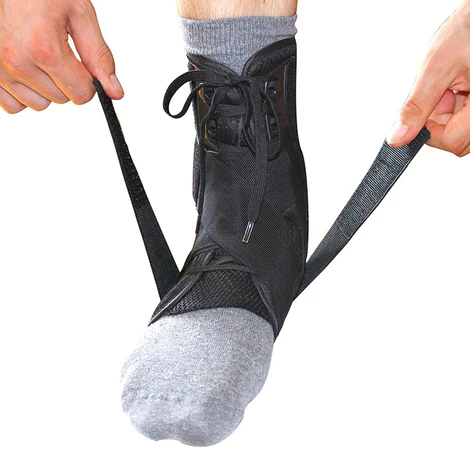
Breathable black ankle brace with adjustable wrap straps for a secure, low-profile fit.
Why it may fit this use: a lower-profile adjustable brace can be a practical option for people who want light support and a customizable fit.
How tight should an ankle brace be for sleeping?
A good rule: snug, not restrictive. You want support, but you do not want to cut into circulation.
Watch for these signs that it is too tight:
- Tingling or numbness
- Toes turning pale, blue, or unusually cold
- Throbbing pressure
- Deep strap marks that do not fade
- More pain after putting it on
If you need help with fit and positioning, read how to wear an ankle brace properly in 8 easy steps.
Should you wear an ankle brace all day too?
Many readers asking about sleeping in a brace also want to know whether they should wear one all day. The answer again depends on the injury and activity level.
During the early phase of a sprain, some people wear a brace during walking, work, and other daily movement, then continue with light support overnight if needed. But long-term use without a recovery plan is not always ideal. As pain, swelling, and instability improve, the usual goal is to rely less on the brace and more on gradual return to normal movement, strength, and balance work.
If your main question is activity use rather than sleep, these related guides may help:
Tips for sleeping with an ankle brace more comfortably
- Choose the right brace style. Bulky or very rigid braces may be uncomfortable in bed unless specifically prescribed.
- Loosen the fit slightly for sleep if appropriate. Support should remain secure, but not overly compressed.
- Elevate the ankle. A pillow under the lower leg or foot may help with swelling and comfort.
- Check your skin before bed and in the morning. Look for rubbing, pressure points, or irritation.
- Wear a sock under the brace if it helps reduce friction.
- Follow your injury-specific instructions. A sports sprain, post-op ankle, and chronic instability case may all need different guidance.
What kind of ankle brace is best for overnight use?
For sleep, many people prefer a brace that is:
- Adjustable
- Breathable
- Low profile
- Supportive without being overly rigid
If you need more structured support for sports, daytime activity, or a more locked-in feel, a lace-up style may be worth considering.

Adjustable ankle support with a secure lace-up fit.
Why it may fit this use: useful for people who want a more secure feel during the day and controlled support during recovery, though some sleepers may prefer a less structured brace at night.
A practical rule of thumb
If your ankle feels better, safer, and more stable with the brace on—and you do not have numbness, discoloration, worsening swelling, or medical instructions against it—sleeping with an ankle brace may be reasonable.
If the brace makes sleep worse, feels too tight, or seems to aggravate symptoms, do not force it. The right overnight setup may involve a different brace, looser adjustment, elevation, or direct medical guidance.
Need a next step?
If you are comparing brace styles for recovery, daily wear, or nighttime support, explore the full ankle support brace collection to see more options in one place.
FAQ
Can you sleep with an ankle brace on?
Yes, some people can sleep with an ankle brace on, especially after a mild to moderate sprain or when they want extra support overnight. It should feel supportive, not overly tight.
Should you sleep with an ankle brace on after a sprain?
Sometimes. It may help reduce awkward movement at night and provide support when getting out of bed. But if swelling is severe, pain is worsening, or your doctor gave specific instructions, follow that plan first.
Can you wear an ankle brace to bed every night?
You can in some cases, but it should not become a substitute for proper recovery. If you need a brace every night for a long time, it may be worth reassessing the fit, your activity level, and whether you need more targeted rehab guidance.
Is it okay to wear ankle support while sleeping?
It can be okay if the support is breathable, correctly fitted, and not too tight. Stop using it overnight if it causes numbness, skin irritation, or circulation concerns.
Should I wear an ankle brace all day?
Some people do in the early stage of recovery, especially during walking or daily activity. The right schedule depends on the injury, symptoms, and how stable the ankle feels.